




If you’re a UK or German homeowner planning a heat pump, solar array, battery or EV charger in 2026, this European home energy incentives guide cuts through the noise. National schemes have evolved rapidly: the UK Boiler Upgrade Scheme now covers air-source heat pumps at £7,500, Germany’s KfW 442 bundles solar, storage and charging into a single grant, and VAT reductions across both countries make retrofits cheaper than ever.
- European home energy incentives guide at a glance
- How European home energy incentives actually work
- UK incentives in 2026 for heat pumps and insulation
- UK support for solar, home batteries and EV charging
- Germany’s 2026 incentives for heat pumps and retrofits
- Germany’s support for solar, home batteries and EV charging
- Comparing UK and German incentives on real projects
- Key incentive trends across the rest of Europe
- Planning your 12-month incentive-optimised retrofit roadmap
- Frequently Asked Questions
Yet the application windows, eligibility rules and technology combinations shift every budget cycle, leaving many households either over-paying or missing deadlines altogether. Below you’ll find a country-by-country breakdown of the most valuable incentives, realistic savings scenarios for common retrofit packages, and a practical 12-month timeline that shows when to apply, when to install, and how to stack grants with loans and tax relief.
European home energy incentives guide at a glance
This European home energy incentives guide for 2026 starts with the basics: almost every European country now offers some mix of grants, tax breaks, low-interest loans or feed-in tariffs to push homeowners towards heat pumps, rooftop solar, batteries, EV chargers, insulation and smarter controls. The UK and Germany are among the most active, but rules, paperwork and payout levels differ sharply, so your savings depend heavily on where you live, your property type and how far you go with a retrofit.
Across Europe, incentives are being tightened and refocused in line with EU-level energy efficiency rules such as the evolving Energy Efficiency Directive. In practice this means more support for deep fabric upgrades, heat pumps and smart electrification, and fewer open-ended subsidies. Most schemes now aim for measurable energy use cuts rather than just rewarding one-off equipment purchases.

In the UK, 2026 homeowners typically encounter a patchwork of schemes. Core examples include a heat pump grant that can cover a substantial share of install costs, varying local grants for insulation and glazing, and support for EV charging and home batteries that continues to evolve. If you are exploring whether to prioritise the UK or Germany for a move or investment, the comparison in UK vs Germany home energy incentives outlines which country tends to be more generous for different technologies.
Germany couples strong national policy with powerful KfW bank programmes. In 2026 many homeowners can mix direct subsidies for rooftop PV and storage with low-interest loans and one-time grants for efficiency upgrades. Batteries in particular are attractive when rolled into solar packages, and detailed terms are broken down in the guide to Germany KfW battery subsidy 2026. German incentives often reward whole-house renovation concepts rather than isolated measures, which can unlock higher support if you plan a comprehensive retrofit.
Typical savings ranges in 2026 vary, but a practical rule of thumb across leading European schemes looks roughly like this: heat pump grants can often cover a notable fraction of install costs, especially where replacing old oil or gas boilers; rooftop solar can see upfront costs cut significantly and long-term bills reduced more once paired with export payments; home batteries may get smaller percentage subsidies but can still improve solar self-consumption and resilience; EV charger support tends to be modest per unit but still offsets a slice of hardware and install costs; and insulation or glazing grants can be generous when bundled in whole-house energy performance upgrades.
For UK homeowners, the European home energy incentives guide naturally points toward a few priority decision paths. If you already have or plan solar, check whether a battery grant or finance option makes sense via the step-by-step resource on how to apply UK battery grant. If you are electrifying transport, the article on EV charger grant UK eligible 2026 clarifies who still qualifies and how employer or landlord support might stack. For deeper fabric and heating changes, national and regional schemes can often be layered for better total value.
- Most European homeowners in 2026 can access at least one incentive for heat pumps, solar, insulation or EV charging.
- UK and German schemes are among the most developed but use different mixes of grants, loans and export payments.
- Bundling measures into a staged retrofit usually unlocks better support than funding single devices in isolation.
- Battery and EV charger incentives are more targeted but can meaningfully improve payback when paired with solar.
- Use country-specific guides linked from this European home energy incentives guide to confirm exact eligibility, timelines and application steps before committing to quotes or contractors.
How European home energy incentives actually work
The European home energy incentives guide for 2026 really starts at EU level. Brussels does not hand cheques to homeowners, but it sets binding efficiency and renewables targets through laws like the updated Energy Efficiency Directive. Member states must hit these targets by cutting demand and boosting clean supply, so they design national grants, cheap loans, tax relief and tariff rules to move households in that direction.
Each country has freedom in the mix it uses. The EU sets the direction of travel (for example, phasing out fossil boilers and improving building performance), then national governments turn that into specific schemes and funding channels. In practice, this means a UK or German homeowner never applies to the EU; instead, they feel the effect of EU rules through the offers and price signals embedded in domestic programmes and energy bills.
| Incentive type | What it is | Where you see it | UK / Germany examples |
|---|---|---|---|
| Grants | Cash towards upgrade cost | Installer quote, invoice | UK Boiler Upgrade; German Zuschuss |
| Subsidised loans | Below-market finance | Bank repayment schedule | KfW loans; UK pilots |
| Tax rebates | Bill reduction via tax code | Annual return, PAYE code | German tax deduction |
| Feed-in / export | Pay for exported electricity | Energy bill credits | UK export tariffs; EEG |
| Dynamic-tariff support | Cheaper off-peak power | Time-of-use unit rates | Agile-style tariffs; EV rates |
Grants are the most visible piece of the European home energy incentives guide for homeowners. In the UK, schemes like the heat-pump grant reduce the upfront invoice from an MCS-certified installer; you pay the discounted amount and the installer claims the rest. In Germany, federal and KfW grants work similarly: a portion of eligible costs for measures like heat pumps, insulation or batteries is covered as a non-repayable Zuschuss, deducted from the contractor bill once approved.
Subsidised loans and tax rebates mainly matter for larger retrofit bundles. Germany uses KfW loans with low interest and long terms so a whole-house upgrade (heat pump, windows, insulation, PV, battery) can be financed like a cheap mortgage. Separate tax deductions let you offset a portion of renovation costs against income tax over several years. The UK has experimented with green loans via banks and guarantees, but as of 2026 most households still rely on standard finance, topped up by targeted grants rather than broad tax relief.
Tariff-based incentives change how you operate the tech you install. Old-style feed-in tariffs have largely been replaced by export or market premiums. In the UK, you now get paid a fixed or variable rate for each kWh your solar exports, shown as a line item on your electricity bill. In Germany, similar export and market tariffs appear on your Stromabrechnung under national renewables rules.
Related internal resource EV charger grant UK eligible 2026.
UK incentives in 2026 for heat pumps and insulation
For UK homeowners planning a 2026 retrofit, support for heat pumps and insulation remains central. Most schemes are tied to EPC improvements, income, or regional delivery, and several can be combined on a single semi-detached home if you plan sequencing carefully.
| Scheme | Main focus | Typical help | Key limit |
|---|---|---|---|
| Boiler Upgrade Scheme | Heat pumps | £5k, £7.5k grant | No new-builds |
| GB Insulation Scheme | Loft/cavity/solid walls | Often 100% cost | Eligibility checks |
| ECO4 | Whole-house upgrades | High support | Low-income only |
| LA Flex (ECO4 Flex) | Local priority homes | Variable, means-tested | Council criteria |
| Winter/other help | Fuel poverty relief | Bill credits | Very income-linked |
The Boiler Upgrade Scheme (or any successor operating in 2026) is the core UK heat pump grant. Owner-occupiers and small landlords in England and Wales can usually claim a fixed amount off the upfront cost of an air-source or ground-source heat pump, provided a gas or oil boiler is being replaced and the property is not a new-build. The installer must be MCS-certified and submit the application on your behalf. Grants are capped per system, so any overspend is yours; oversized systems, high-end brands, and difficult pipework can push you well beyond the subsidy.
For a typical semi-detached home, a mid-range air-source heat pump might total £9,000-£11,000 installed. With a £7,500 Boiler Upgrade Scheme grant, out-of-pocket cost could fall to around £1,500-£3,500, assuming no major radiator upgrades. However, poor EPC ratings or uninsulated fabric can make the home unsuitable and lead reputable installers to refuse the job until insulation is improved.
Insulation incentives in 2026 are expected to run mainly through the Great British Insulation Scheme and ECO4. These are delivered via energy suppliers and their contractors, not directly by government portals. Depending on income, benefits status, and local area targeting, a semi-detached home may receive heavily subsidised loft and cavity wall insulation, and in some cases partial support for solid-wall or underfloor upgrades. The most generous offers usually go to low-income or vulnerable households, but some middle-income homes in targeted postcodes can still qualify.
Local Authority Flexible Eligibility (ECO4 Flex) lets councils widen access to these home energy incentives using their own criteria, such as high energy bills, health conditions made worse by cold, or slightly higher incomes than national schemes allow. This creates postcode variation: two similar homes across a council boundary can see different levels of support in 2026.
In practice, a realistic 2026 stack for a gas-heated semi-detached property might look like this: first, loft and cavity insulation installed via the Great British Insulation Scheme with little or no upfront cost; second, draught-proofing and basic controls paid by the homeowner; third, an air-source heat pump funded partly by the Boiler Upgrade Scheme. Combined, this can lift the EPC to band C or better, reduce space-heating demand significantly, and make future add-ons like home batteries or smart controls more attractive.
Common pitfalls include signing up with cold-calling installers, assuming all measures are free, and not checking whether measures could compromise ventilation or create damp.
UK support for solar, home batteries and EV charging
The UK part of any European home energy incentives guide is now built around zero VAT on most domestic clean-tech, smart tariffs and export payments rather than big upfront grants. By 2026, the focus for rooftop solar, home batteries and EV chargers is on shaving VAT, stacking tariffs and using targeted support where it still exists in Scotland, Wales and for specific technologies.
Most homeowners in England will pay 0% VAT on supply and installation of rooftop solar, home batteries installed with solar, and domestic EV chargepoints. Where you can’t get a direct grant, this VAT cut can still knock 5-10% off a typical system cost. The main cash support in 2026 is expected to be Scotland’s and Wales’s interest-free or low-interest loans and occasional grants for renewables and storage, plus time-limited local authority schemes.
| Technology | Main 2026 support | Who it suits | Key savings route |
|---|---|---|---|
| Rooftop solar | 0% VAT, SEG | Daytime-at-home users | Bill cuts, exports |
| Home battery | 0% VAT, local loans | TOU-tariff users | Peak shifting, backup |
| EV charger | 0% VAT, niche grants | Off-street parking | Cheap off-peak miles |
| Smart tariffs | TOU, DSR rewards | Flexible households | Price arbitrage |
| Export | Smart Export Guarantee | Solar owners | Paid for surplus |
For solar, the Smart Export Guarantee (SEG) remains the core national incentive in 2026. Licensed electricity suppliers set their own export rates for surplus kWh; fixed-rate SEG deals can give a predictable income stream when modelled over 10-15 years. Some suppliers bundle SEG with dynamic time-of-use (TOU) tariffs, rewarding households that combine PV with smart controls and storage. The Energy Efficiency Directive framework pushes member states towards such market-based incentives; in the UK, this translates mainly into sharper price signals rather than broad capital subsidies.
Home batteries benefit most where you can pair 0% VAT installation with aggressive TOU tariffs and, in some cases, demand side response (DSR) programmes that pay you for letting the supplier or aggregator control charging windows. If you’re considering storage, see the dedicated walkthrough on how to apply UK battery grant for the latest on any remaining regional grants or soft loans. In practice, 2026 payback for batteries is often driven by arbitrage: charging off-peak, discharging at the evening peak, and maximising self-consumption of your solar output.
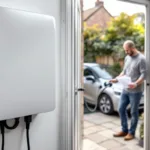
For EVs, the mass-market grant for home chargers has gone, but 0% VAT continues to lower installed costs, and there may still be targeted support for renters, flat-dwellers or small businesses. The real incentive is now the tariff: smart EV-only rates can slash overnight charging costs, and some suppliers also offer small bonuses for letting them modulate charging in response to grid signals. If you’re unsure whether you still qualify for niche support, the guide on EV charger grant UK eligible 2026 explains the remaining options and documentation step by step.
Stacking these elements is where the UK becomes competitive in a broader European home energy incentives guide. A typical 2026 sequence is: install solar and a pre-wired battery at 0% VAT; add a smart EV charger; switch to a dynamic TOU tariff with SEG export; then opt into DSR where available.
Germany’s 2026 incentives for heat pumps and retrofits
Germany’s 2026 incentives for heat pumps and efficiency upgrades sit under the federal BEG framework (Bundesförderung für effiziente Gebäude), mainly delivered via KfW and BAFA. These programmes combine upfront grants with low-interest loans for heat pumps, insulation, windows, and full energy-efficient refurbishments, with support levels scaled by building age, income, and achieved efficiency standard.
For single-family homes, the BEG distinguishes between individual measures (Einzelmaßnahmen) such as a heat pump or façade insulation, and full refurbishments to an Effizienzhaus standard via KfW. Older, fossil-heated buildings typically receive the highest support, especially when owners switch from oil or gas to all-electric heat pumps and combine that with envelope upgrades.
| Measure type | Typical grant | Max bonus | Loan option |
|---|---|---|---|
| Heat pump only | 25-40% | +10-20% | KfW top-up loan |
| Insulation/windows | 15-20% | +5-10% | KfW efficiency loan |
| Full retrofit | 20-45% | +20% | Large KfW loan |
| Low-income bonus | +10-30% | Income-linked | Standard KfW |
| Energy advice | up to 80% | Cap per report | None |
Heat pump support in 2026 generally covers around 25-30% of eligible costs as a base subsidy, rising toward 40% when an old oil or particularly inefficient gas boiler is removed. Additional bonuses can apply for using natural refrigerants or drilling for ground-source systems. Low- and middle-income owner-occupiers may receive a higher percentage subsidy on a capped investment volume, significantly lowering net outlay. Older buildings (pre-2002 or pre-1995, depending on the specific rule) often unlock better terms when the project yields large carbon and primary-energy savings.
Envelope measures such as roof, wall, and basement insulation, as well as modern triple-glazed windows and airtightness work, usually attract 15-20% grants under BEG Einzelmaßnahmen. When the homeowner commits to a whole-house retrofit to a KfW Effizienzhaus standard, however, combined grant and bonus rates can climb much higher, especially for deep renovations that cut energy demand well below current building code. These whole-house packages must be planned and signed off by an accredited energy consultant (Energieeffizienz-Experte), whose fees themselves are often subsidised up to around 80% within the advisory schemes.
In practical terms, consider a detached single-family home built in the 1980s with an old gas boiler. A typical air-to-water heat pump installation might cost about €25,000 including hydraulics and buffer tank. With a 30-40% BEG grant, the owner could receive €7,500-€10,000 in subsidy, reducing the upfront bill to roughly €15,000-€17,500. If the same household also insulates the roof and upgrades windows for another €35,000, a 20% envelope grant would cut that by €7,000. Layering both measures yields a total project of €60,000 with perhaps €14,500-€17,000 covered by grants, and the remainder optionally financed via a low-interest KfW efficiency loan.
For deeper refurbishments, KfW’s Effizienzhaus loans and repayment grants become central. A homeowner targeting a demanding standard such as Effizienzhaus 55 might receive a combination of subsidised interest and a partial debt write-off once the upgrade is verified, effectively turning part of the loan into a grant. These incentives are designed to align with the EU’s wider energy-efficiency and renovation goals under policies like the Energy Efficiency Directive, while still being adapted to German building stock and income structures.
Germany’s support for solar, home batteries and EV charging
Germany has one of the most layered incentive systems in Europe for rooftop solar, home batteries and EV charging. While national rules set the backbone (feed-in tariffs, KfW loans and grants), each state and many cities add their own bonuses, making it possible to “stack” support if you plan carefully.
At the core is the Renewable Energy Sources Act (EEG), which governs how you’re paid for exporting solar power and how self-consumption is treated. As of 2026, most new residential systems up to 30 kWp can export surplus electricity at a fixed tariff for 20 years, with slightly higher rates for systems that feed in all power and lower but still stable tariffs for self-consumption systems. The bigger savings, however, usually come from using your own solar directly and pairing it with a battery, reducing grid purchases that are taxed and include network charges.
| Technology | Main federal tool | Typical support form | Stackable add-ons |
|---|---|---|---|
| Rooftop solar | EEG + KfW loans | Feed-in tariff, low-interest | State, municipal grants |
| Home batteries | KfW subsidy | Per kWh grant | City storage bonuses |
| EV wallboxes | KfW charging grant | Flat per charger | Utility rebates |
| Solar + battery | Bundled KfW | Higher rates, caps | State top-up combos |
| Smart systems | Smart meter rules | Cost caps, support | Dynamic tariff offers |
For rooftop PV, KfW traditionally offers low-interest loans that work alongside the EEG feed-in tariff. Some states, such as Bavaria and Berlin, periodically run extra grants that pay a set amount per installed kilowatt, or add bonuses for building-integrated systems and tenant power models. Because these local funds are limited and revised frequently, homeowners generally check municipal websites and regional energy agencies early in the planning stage. Self-consumption is encouraged indirectly: grid power is taxed and includes levies, while using your own solar avoids most of these, so a well-sized system can cut household bills more than the export tariff itself suggests.
Home battery subsidies are currently anchored in KfW programmes that tie the grant to both storage capacity and the presence of a new or recently installed PV system. Many schemes use a euro-per-kWh model with a maximum cap per home, and require minimum technical standards such as round-trip efficiency and grid-friendly operation. Some cities add their own bonuses for batteries connected to virtual power plant services or capable of providing grid support. These layers can be complex, which is why many installers and energy advisers point homeowners to dedicated explainers such as Germany KfW battery subsidy 2026 before signing contracts.
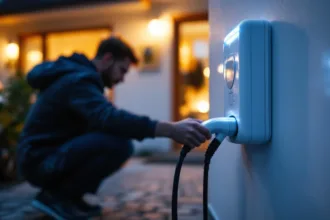
For EV charging, KfW has repeatedly funded residential wallbox programmes that pay a fixed grant per charger, often with additional amounts when the charger is linked to on-site renewables or a battery and can adjust charging based on grid signals. Some regional utilities also provide rebates or reduced network charges for controllable wallboxes that they can throttle during peak times. In combined setups, a typical German homeowner might install a 7-10 kWp PV array, a 7-10 kWh battery and a 11 kW wallbox.
Comparing UK and German incentives on real projects
To make this European home energy incentives guide concrete, it helps to see how the UK and Germany perform on real-world projects. Figures below are indicative 2026 ballparks for typical owner-occupied homes, assuming solid credit and mainstream installers. Local prices and utility rules vary, so treat these as directional benchmarks, not quotes.
| Scenario | Country | Net upfront cost | Simple payback | CO₂ cut |
|---|---|---|---|---|
| Heat pump | UK | £2k, £5k | 8-14 years | 40-60% |
| Heat pump | Germany | €5k, €10k | 7-12 years | 50-70% |
| Solar + battery | UK | £6k, £10k | 8-13 years | 50-70% |
| Solar + battery | Germany | €8k, €13k | 9-14 years | 50-70% |
| Deep retrofit | UK | £15k, £30k | 12-20+ years | 60-80% |
For a heat pump-only upgrade, the UK’s Boiler Upgrade Scheme can cover a large share of the hardware, so many households see upfront costs around £2,000-£5,000 after grant, especially if radiators and electrics need minimal work. German homeowners often face higher total project costs, but stronger percentage subsidies on low-carbon heating can still bring a typical air-to-water heat pump into the €5,000-€10,000 net range. Because German homes are often better insulated and gas prices tend to be higher, annual running-cost savings can be larger, pulling payback into the lower half of the ranges shown.
On solar plus batteries, UK incentives lean more on VAT relief and export tariffs than direct grants. A 4-6 kW PV array with a 5-10 kWh battery might cost £10,000-£14,000 before support, with VAT savings and smart export tariffs effectively trimming a few thousand pounds over the first years, leaving a practical net of £6,000-£10,000 and paybacks often just under a decade when paired with time-of-use tariffs. In Germany, per-kilowatt grants and some state-level battery subsidies can lower acquisition costs, but high quality standards and strong demand keep installed prices elevated, so households frequently land in the €8,000-€13,000 range for similar capacity, with comparable long-term returns.
EV charger plus smart tariff incentives show sharper contrasts. UK homeowners can still access targeted support for home chargepoints in specific situations and then compound benefits by shifting charging to cheap overnight rates; this can claw back hardware and install costs of several hundred to a couple of thousand pounds within a few years. German EV support is more concentrated on the vehicle purchase and grid-friendly charging schemes, with fewer broad national subsidies for basic residential chargers themselves, so the economics depend heavily on regional utility programmes and how much daytime versus night-time charging is possible.
Deep retrofits that combine fabric upgrades, heat pumps, solar and smart controls stretch payback but unlock the largest emissions reductions.
Key incentive trends across the rest of Europe
Across Europe, homeowners are seeing a fast-moving mix of grants, tax breaks and low-interest loans aimed at cutting gas dependence and hitting the EU’s 2030 efficiency targets under the Energy Efficiency Directive. While details differ from France to Finland, the wider pattern is clear: stronger support for deep retrofits, tighter performance rules for buildings, and more emphasis on smart, flexible homes.
Most major EU countries now prioritise heat pumps and fabric upgrades. France’s MaPrimeRénov’, Italy’s post-“Superbonus” schemes and Nordic programmes typically offer higher support when you combine measures (insulation plus heat pump, for example) and hit specific efficiency classes. Time-limited “super-bonuses” or boosted rates remain common: enhanced rebates for low-income households, older homes, or whole-house renovations completed by a deadline.
Another visible trend is shifting some support from pure solar PV to integrated systems: PV plus batteries, EV chargers and smart controls. The Netherlands, Belgium and the Nordics increasingly reward self-consumption, demand response and flexible tariffs, with grants or tax deductions for smart thermostats, load-shifting devices and connected heat pumps that respond to grid signals.
Finally, many schemes across Europe are moving from simple purchase subsidies towards outcome-based support. That can mean step-up bonuses if you achieve a certain building energy label, or performance-linked loans where rates improve once verified savings are delivered. For UK and German homeowners, this wider European home energy incentives guide context signals what to expect next: stronger nudges toward whole-home plans, digital control, and evidence-backed savings rather than one-off gadget funding.
Planning your 12-month incentive-optimised retrofit roadmap
Stacking European home energy incentives requires careful timing. Most homeowners waste months applying for grants in the wrong order or miss application windows entirely. A structured 12-month plan maximises rebates and minimises disruption.
Month 1-2: Audit and baseline. Book an accredited energy assessment (UK: EPC; Germany: Energieberater). Document current consumption, identify the worst-performing elements, walls, windows, heating, and confirm which measures qualify under UK vs Germany home energy incentives. Switch to a time-of-use tariff now; the data will inform battery sizing later.
Month 3-4: Fabric first. Apply for insulation and window grants (UK: ECO4 or local authority schemes; Germany: KfW 261). Complete these works before heat-pump installation; most schemes require improved fabric performance, and installers need a stable thermal envelope to size equipment correctly. Secure quotes from at least three MCS- or BAFA-certified contractors.
Month 5-7: Heat-pump application and install. Submit your heat-pump grant (UK: Boiler Upgrade Scheme; Germany: BEG EM) as soon as fabric works finish. Lead times stretch to 12-16 weeks in peak season. Do not sign contracts before grant approval; you will forfeit the rebate.
Month 8-9: Solar and battery. With heating sorted, add generation and storage. In Germany, combine KfW 442 battery subsidy with your solar VAT exemption. UK homeowners should explore how to apply UK battery grant if eligible, or self-fund and claim SEG export payments.
Month 10-11: EV charger. Install your home charger last. UK grants now apply only to flats and rentals; German KfW 439 closed in 2023, but some Länder offer regional top-ups. Check EV charger grant UK eligible 2026 for current rules.
Month 12: Smart controls and optimisation. Fit smart thermostats, monitor performance, and adjust tariff or export contracts. Many incentive schemes require post-install reporting; file these promptly to release final payments and avoid clawback.
Never overlap applications that share the same cost base, double-dipping disqualifies both claims. Keep every invoice, certificate, and email; auditors routinely request proof two years later.
Frequently Asked Questions
Who has the cheapest energy prices in Europe?
Wholesale and retail energy prices shift, but in recent years countries like France and some Eastern European states have often had lower average electricity prices than the UK or Germany.
Which country is the most energy efficient in the world?
Global rankings often place countries like Denmark, Germany, and some Nordic nations near the top for energy efficiency, thanks to strong building codes and long-running retrofit support.
What does an A++ energy rating mean?
An A++ label on older EU scales signalled a product using significantly less energy than a standard A-rated model of the same type. The EU and UK now use a simpler A, G scale, with A as best.
Can I get funding to replace my windows?
Many European schemes, and some local programmes in the UK and Germany, do provide grants, tax relief, or low-interest loans for high-performance windows, usually as part of a broader energy-efficiency retrofit.
What wastes the most energy in a house?
The biggest energy wastes are poor roof and wall insulation, single or leaky glazing, old boilers or inefficient heat sources, uncontrolled hot-water systems, and always-on standby loads.
The European home energy incentives landscape in 2026 rewards homeowners who plan early, combine technologies strategically, and apply before budget caps are reached. Whether you’re installing a heat pump under the UK Boiler Upgrade Scheme or bundling solar, battery and EV charging through Germany’s KfW 442, the key is to lock in your grant reservation as soon as your installer confirms feasibility, then complete the work within the scheme’s deadline.
Use the 12-month retrofit timeline as your checklist, bookmark the official portals for your country, and revisit eligibility each quarter, many programmes refresh funding or tweak thresholds mid-year.