



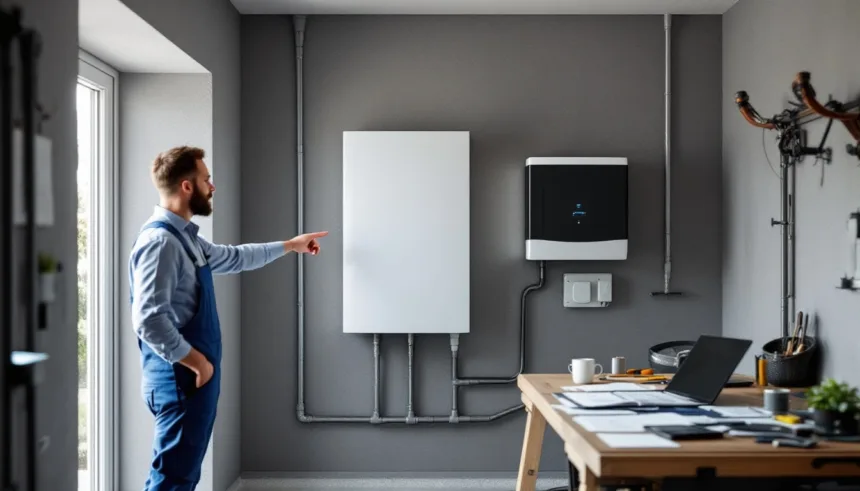
Germany’s home battery subsidy landscape in 2026 centres on low-interest KfW loans rather than direct cash grants, with the most relevant programmes being KfW 270 (Renewable Energy Standard) for solar-plus-storage installations and select BEG-linked offers for whole-building retrofits. Unlike earlier feed-in tariff eras, today’s support stack combines federal loan products, state-level (Länder) top-up grants, and the permanent 0 % VAT on photovoltaic systems and batteries introduced in 2023.
- Germany KfW battery subsidy 2026 at a glance
- How Germany KfW battery subsidy 2026 really works
- Key KfW programmes for solar and batteries
- Other German subsidies that stack with KfW
- Cost and payback with and without KfW support
- Step-by-step: applying for KfW solar battery finance
- Eligibility rules and technical requirements
- Integrating EV charging with KfW-funded storage
- Planning your project timeline to protect subsidies
- Frequently Asked Questions
Understanding which KfW line fits your project, how much interest savings and regional grants shorten payback, and the correct application sequence before signing supplier contracts determines whether you capture every euro of support or forfeit eligibility. This guide walks through the mechanics of Germany KfW battery subsidy 2026 options, compares real-world payback scenarios with and without subsidies, and maps the step-by-step timeline homeowners must follow to structure applications correctly.
Germany KfW battery subsidy 2026 at a glance
In 2026, the phrase Germany KfW battery subsidy 2026 mostly refers to low-interest KfW loans that make a home PV-plus-battery system cheaper to finance, plus a patchwork of state and city grants that directly cut the battery price. There is no single nationwide KfW cash rebate for home batteries, but KfW programs remain central to how German homeowners structure funding.
The two most important KfW lines for solar storage are:
- KfW 270 (Erneuerbare Energien, Standard): classic low-interest loan for PV systems, often including a home battery when financed as part of the same project. Banks use it to offer longer terms and lower rates than standard consumer loans.
- BEG-related products (efficiency and renovation loans): where a battery is part of a broader efficiency or electrification upgrade (e.g., heat pump, insulation), it may be financed under a BEG-linked KfW line if the overall project meets efficiency criteria. The battery usually is not subsidized alone, but it can ride along in a supported renovation package.
These KfW options can usually be combined with regional and municipal programs that act as the real “battery subsidies” in 2026: many Länder or cities periodically offer fixed grants per kWh of storage or capped lump sums. Current overviews of German PV support, such as this guide to solar subsidies in Germany, show how quickly local offers change, so checking your Bundesland and city before signing contracts is crucial.
Alongside KfW and local grants, homeowners benefit from tax perks: new rooftop PV up to defined size thresholds is typically VAT-exempt on purchase, and feed-in income from small systems is usually income-tax-free under current rules.
Related internal resource UK home battery grant 2026.
How Germany KfW battery subsidy 2026 really works
The Germany KfW battery subsidy 2026 is less a classic “cash-for-batteries” grant and more a package of cheap, state-backed finance that makes solar-plus-storage projects pencil out better. KfW is Germany’s public development bank; it does not sell retail loans directly to you. Instead, it designs subsidised loan programs and passes the funds to your local Hausbank (Sparkasse, Volksbank, commercial bank), which then signs the loan contract with you under KfW’s special terms.
More Read
Two mechanisms matter for homeowners: low-interest loans and, in some programs, small repayment bonuses that reduce the outstanding principal. With lines such as KfW 270 (renewable energy) the bank gives you below-market interest for PV and batteries. That interest subsidy is effectively a battery subsidy, because the total financing cost for your combined solar-plus-storage system drops versus a normal bank loan. In broader building-efficiency programs (BEG-linked offers), any storage you add as part of a qualifying renovation benefits indirectly from the same discounted finance.
The money flow is simple: you and your installer define system size and cost, your house bank applies for the relevant KfW program before installation starts, KfW approves and refinances the loan in the background, and you draw down funds from your house bank as the project is built. You never interact with KfW directly and you never receive a separate battery cheque; the financial support is embedded in your loan conditions and, where available, in partial-debt relief after completion.
Pure battery-only subsidies at national level have largely disappeared, because policymakers prefer to support integrated solar-plus-battery or building-efficiency packages that cut emissions and grid load together.
Related internal resource home energy incentives Europe overview.
Key KfW programmes for solar and batteries
By 2026, there is no single “Germany KfW battery subsidy 2026” cash grant. Instead, KfW mainly supports home batteries indirectly via low-interest loans and broader efficiency programmes that include PV and storage as eligible measures. For most homeowners planning solar plus storage, three programme families matter: KfW 270 for PV and batteries, BEG-related renovation loans where a battery can be part of an efficiency package, and municipal/utility grants that can be combined with KfW financing.
| Programme | Use case | Typical volume | Battery angle |
|---|---|---|---|
| KfW 270 | PV & storage | Up to several 100k € | Loan for battery cost |
| BEG Einzelmaßnahme | Efficient heating | 10k, 60k € | Battery in package |
| BEG Wohngebäude | Deep renovation | 100k, 150k €+ | Battery in full upgrade |
| Local/utility grants | Top-up support | 1k, 5k € | Direct storage subsidy |
| Wallbox schemes | EV charging | 0.5k, 1.5k € | Sometimes tied to battery |
KfW 270 Renewable Energies, Standard remains the core line for homeowners who want to finance a rooftop PV system and a home battery in 2026. It is designed for on-site generation (PV, wind, biomass) and associated storage. While exact interest bands change with market rates and bank margins, the structure is relatively stable:
- Eligible: residential PV systems, inverters, mounting, wiring, and stationary batteries directly connected to the PV system.
- Loan size: commonly anywhere from about 10,000 € for a small PV-plus-storage system up to low six figures for larger buildings; there is typically no formal minimum other than the bank’s own threshold.
- Financing share: usually up to 100 % of the investment costs for the PV and battery, including planning and installation.
- Interest: tends to undercut standard consumer loans; banks often offer fixed rates over 5-20 years, with the precise spread changing regularly.
- Constraints: no pure “battery only” upgrade if the PV is not part of the project at all; the storage must be clearly tied to renewable generation and comply with technical standards.
For many households, KfW 270 functions as a de-facto Germany KfW battery subsidy 2026, because the interest advantage over a normal unsecured loan can easily reduce the lifetime financing cost of the battery by hundreds of euros, shortening payback compared with no support.
- The battery is usually an “ancillary measure” that supports the main efficiency step (e.g., replacing fossil heating).
- Loan sizes can reach into the 50,000-150,000 € range for full-house renovations, so there is more than enough headroom to include storage hardware.
- Effective subsidy comes via interest reductions and, in some variants, partial repayment bonuses if defined efficiency levels are met.
Other German subsidies that stack with KfW
For most homeowners the Germany KfW battery subsidy 2026 picture is really about cheap federal loans (especially KfW 270 and BEG-related offers) plus layered state and local grants. These instruments usually stack, but each program has its own rules on timing, technologies, and state-aid ceilings that you must match carefully.
| Instrument | Level | What it supports | Typical stacking |
|---|---|---|---|
| KfW loans | Federal | PV, battery, building | Base financing |
| Länder grants | State | Battery, PV, wallbox | Often plus KfW |
| Municipal funds | Local | Extra top-ups | Case-by-case |
| 0% VAT | Federal tax | PV, battery, wallbox | Alongside all |
| Feed-in tariff | Federal (EEG) | PV exports | Parallel revenue |
KfW loans normally treat other grants as equity: your state or municipal battery subsidy reduces the net investment that KfW finances but does not disqualify you. The common pattern is: use KfW 270 (or a BEG-efficiency loan for whole-building upgrades) as the main funding line, then let Länder/municipal programs reduce your own cash share. Some state schemes explicitly name KfW compatibility in their guidelines; if they do not, planners usually assume stacking is allowed unless the text forbids other public aid.
Stacking with 0% VAT on PV and storage is straightforward: this tax relief applies automatically if your installation meets size and use rules, and it does not count as a grant. Feed-in tariffs under the EEG similarly run in parallel and generally do not conflict with KfW funding, Länder grants, or utility bonuses. What can break eligibility are state-aid and de-minimis caps (especially for prosumers with small businesses) or violating the “no prior start of construction” rule by signing binding contracts before your KfW or grant approval. Check each guideline’s state-aid section and harmonise the application order with your installer so that all subsidy notices are issued before you authorise installation.
Utility and grid-operator bonuses for controllable home batteries or dynamic tariffs add another stackable layer.
Cost and payback with and without KfW support
For a typical homeowner installing a 5 kWp PV system plus a 10 kWh battery in 2026, the Germany KfW battery subsidy 2026 mainly shows up as cheaper financing rather than a direct cash grant. A realistic turnkey price is roughly 17,000-20,000 € including VAT and installation, depending on region and hardware.
Without KfW, many households fund this via a standard bank loan at a higher interest rate and shorter term, which pushes up monthly payments and stretches the payback to well over 10 years in many cases. With KfW line 270 (and, where available, a state or municipal grant on top), the same system can have a noticeably lower effective cost of capital, which directly improves cash flow in the early years and reduces the overall interest burden.
| Scenario | Upfront net cost | Typical loan rate | Indicative payback |
|---|---|---|---|
| Standard bank only | 18,000 € | ~5-7 % | 11-13 years |
| KfW 270 loan | 18,000 € | ~3-5 % | 9-11 years |
| KfW 270 + regional grant | 15,000-16,000 € | ~3-5 % | 7-9 years |
| Cash purchase, no grants | 18,000 € | 0 % | 9-12 years |
The payback estimates assume a typical 4,000-4,500 kWh/year household, self-consumption around 60-75 % thanks to the battery, and current German retail electricity prices. Actual results depend heavily on load profile, local rooftop yield, and future power prices. Where regional subsidies are generous, they effectively knock 2,000-3,000 € off the project price, which shortens payback by about 2-3 years compared with pure standard-bank financing.
Dynamic tariffs and smart control can further shift the economics, even without changing the basic KfW conditions. Using a smart EMS that charges the battery not only from solar but selectively from the grid at low-price hours (and discharges during high-price peaks) can add several percentage points to annual savings.
Step-by-step: applying for KfW solar battery finance
For homeowners planning solar-plus-storage, the key with the Germany KfW battery subsidy 2026 landscape is that applications must be approved before you sign an installation contract or start work. Treat the KfW loan request as the first project milestone, not an afterthought.
Start by defining your system size and budget. Collect at least two detailed quotes that separate PV, battery, wallbox and installation costs, and include datasheets and layout plans. Check with your installer that the components meet current technical requirements of the relevant KfW program (typically KfW 270 or BEG-related lines via your state). Ask them for written confirmation that the system will be grid-compliant and eligible for any regional add-on subsidies.
Next, talk to your house bank or a cooperative bank that actively works with KfW. Bring quotes, income documents and a rough project timeline. The bank checks your creditworthiness and selects the correct KfW product, interest-rate option and term. They enter your data into the KfW portal; you usually only sign the loan application and any supporting bank forms, not KfW forms directly. Do this before you accept an installer offer or pay larger deposits.
Approval for KfW energy-efficiency loans often takes from a few days up to several weeks, depending on bank workload and completeness of documents. After approval, you receive a written financing commitment with a latest-start and latest-completion date. Only then should you sign the installation contract and agree on an installation window that fits comfortably inside KfW’s deadlines.
During installation, keep all invoices split by measure (PV, battery, wallbox, electrical upgrades). The installer should provide commissioning protocol, wiring diagrams and confirmation of proper registration with the grid operator. Your bank uses these plus final invoices to request disbursement from KfW; the loan is then paid out to you or directly to the installer, depending on your agreement. Disbursement can take several banking days, so align payment terms with your installer to avoid cash-flow gaps.
Eligibility rules and technical requirements
For homeowners trying to plan around the Germany KfW battery subsidy 2026 landscape, the core rule is simple: money only flows for grid-connected, professionally installed systems on eligible buildings. The details, however, decide whether your project qualifies or not.
Most KfW lines relevant to solar-plus-storage (notably KfW 270 and BEG-related offers that sometimes cover building-integrated PV and efficiency packages) are open to:
- Owner-occupiers of detached houses, semi-detached homes and flats (including WEGs, where the association applies)
- Private landlords and small housing companies investing in residential buildings
- Self-employed people or small businesses if the PV and battery sit on predominantly residential property
- Municipal or non-profit housing providers when the building is used mainly for living
New builds and existing homes can both qualify, but the route differs. For new construction, KfW typically ties funding to an overall efficiency standard (e.g., EH-level under updated BEG rules). In that case, the PV system and battery storage count as part of the wider energy concept; you usually must apply before you sign binding construction or delivery contracts. For renovations, KfW 270 generally covers PV and batteries on existing buildings without demanding a full building efficiency upgrade, but again, the application must be approved before ordering major components.
Across programs, technical requirements converge on a few points. The PV and home battery system must be installed and commissioned by a certified electrical contractor who is registered with the local grid operator (VNB). DIY installations are almost never eligible. The system must be permanently grid-connected in Germany, comply with current VDE and DIN safety standards (for example, VDE-AR-N 4105 for low-voltage grid connection and the applicable product norms for lithium batteries and inverters), and be registered properly in the Marktstammdatenregister.
On the battery side, KfW and state-level schemes usually require a minimum usable capacity and a stationary application (no second-life EV packs unless explicitly allowed).
Integrating EV charging with KfW-funded storage
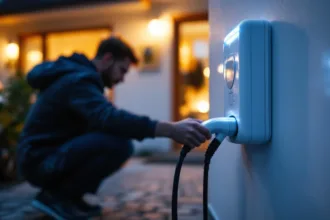
Homeowners planning PV, storage, and an EV wallbox increasingly ask whether they can combine a KfW-backed solar loan with an EV charging subsidy. While the dedicated KfW wallbox grants (such as 440 and 442) are closed, KfW 270 and related BEG-linked offers can still finance an integrated PV + battery + EV setup as a low-interest package, even if the wallbox itself no longer receives a direct grant.
A KfW-funded home battery can serve EV charging in three main ways: it can soak up midday PV surplus so more of your driving is powered by your own roof; it can time-shift cheap grid electricity (e.g., dynamic tariffs) into evening charging; and it can act as a buffer so the wallbox draws smoother power, avoiding high peak loads that might otherwise trigger a grid connection upgrade. Many modern wallboxes and inverters already support “excess PV only” modes or dynamic load management that use battery state of charge as an input.
Previous KfW wallbox subsidies mainly paid a flat grant per charging point and often required 100% renewable electricity. These pots are exhausted, and new nationwide KfW wallbox programs have not been announced for 2026 at the time of writing. However, some Länder and municipal utilities still run their own EV charging incentives; combining those with a KfW 270 loan for the PV and storage portion can cover most of the upfront system cost while keeping interest low and freeing cash for a high-quality, smart wallbox.
Planning your project timeline to protect subsidies
Timing and documentation errors cost German homeowners thousands in lost subsidy eligibility every year. The most common mistake is signing a binding installation contract or making advance payments before receiving official KfW or Länder approval. KfW 270 and most regional programs require that you submit your application before any contractual commitment; even a deposit can disqualify you. Always request a non-binding quote first, submit your application, wait for the Zusage (approval letter), and only then sign the contract.
Starting physical work before approval is equally disqualifying. Do not allow installers to mount panels, install inverters, or deliver batteries until you hold written confirmation. If your installer pressures you to begin early to meet their schedule, find another contractor. A second frequent error is mixing ineligible components, such as pairing a subsidized battery with a diesel generator or installing a system that does not meet the minimum self-consumption or capacity thresholds specified in the program rules. Always cross-check component datasheets against the technical annexes published by KfW or your state energy agency.
Documentation gaps also trigger rejections. Keep every invoice, proof of payment, commissioning protocol, and grid-connection certificate. Submit clear, legible scans; blurry photos or missing pages delay processing and can void eligibility if deadlines pass. If your project spans a calendar-year boundary, confirm whether the program budget rolls over or resets, and plan submissions accordingly.
Sample ideal timeline:
- Month 1: Gather quotes from at least two certified installers; verify component eligibility and installer credentials.
- Month 2: Finalize system design; prepare application documents (property deed, tax ID, technical spec sheets).
- Month 3: Submit KfW or Länder application online; do not sign any contract yet.
- Month 4: Receive approval letter; sign installation contract and pay deposit.
- Month 5-6: Installation, commissioning, and grid connection; collect all certificates.
- Month 7: Submit final documentation and request disbursement or grant payment.
- Below-market interest rates and optional repayment holidays reduce financing cost.
- Combining solar and battery with heat-pump or insulation projects under BEG can unlock higher grant percentages (up to 20-25 %).
- Approved projects signal quality to insurers and future buyers, potentially raising property value.
- Strict pre-approval requirement delays project start by 8-12 weeks on average.
- Detailed documentation and compliance checks add administrative burden; missing a single form can halt disbursement.
- Installer choice may narrow, as not all contractors are willing to wait for approval or meet KfW’s certification standards.
- Lock-in to specific component specs (e.g., minimum cycle life, efficiency thresholds) limits flexibility if you want to upgrade mid-project.
Frequently Asked Questions
What are feed-in tariffs in Germany?
In 2026, German feed-in tariffs for small residential PV are set by the EEG and are usually clearly below household retail prices per kWh. You earn this lower tariff for exported surplus, while self-consumed power replaces expensive grid electricity.
What are the new incentives for electric cars in Germany in 2026?
In 2026, electric car incentives in Germany focus more on tax perks and infrastructure than on large purchase grants. Company-car tax reductions, lower vehicle tax, and support for home and workplace charging remain important.
Are EVs subsidized in Germany?
Direct EV purchase subsidies have been reduced or ended, while tax benefits such as favourable company-car taxation and partial vehicle-tax relief continue. Some municipalities and utilities offer smaller local grants or tariffs.
Does Germany get 60% of its power from renewables?
Germany’s renewable share of electricity generation has risen steadily and in recent years has often been around or just above half of total generation, depending on weather and demand. It does not sit at a fixed 60%, but the long-term trend is upward.
Are German solar panels better than Chinese?
German solar panels are often positioned as premium, with strong quality control, long warranties, and an emphasis on sustainability, usually at higher prices. Chinese panels cover a wide range, from budget to high-end, and dominate on cost.
Securing Germany KfW battery subsidy 2026 support requires applying for the correct loan programme before you sign any purchase contract, layering state grants where available, and claiming the 0 % VAT at invoice time. KfW 270 remains the workhorse for most residential solar-plus-battery projects, cutting effective interest costs and improving payback by one to two years when combined with Länder subsidies.
Track your state’s grant calendar, submit KfW applications early, and keep all documentation timestamped to preserve eligibility and maximise the financial benefit of your home energy investment.