



Home battery installations in the UK have surged alongside solar adoption, but a patchwork of thermal runaway incidents and insurance claims prompted new regulatory clarity in 2024. If you’re considering battery storage, understanding home battery safety UK regulations is no longer optional, it directly affects your insurance validity, resale value, and family safety.
- Home battery safety and UK regulations in 2026
- Key UK rules shaping home battery safety
- Where you can and cannot put a home battery
- Fire, ventilation and emergency access essentials
- Installation quality, certifications and paperwork
- Common home battery risks and how to avoid them
- Insurance, warranties and planning considerations
- Frequently Asked Questions
The new PAS 63100:2024 standard, updated BS 7671 wiring requirements, and fire-service guidance now form a three-layer framework that governs where you can place a battery, how it must be wired, and what ongoing checks you owe it. This guide translates those standards into room-by-room placement rules, installer questions, and maintenance routines you can action before signing a contract, with short notes on parallel German VDE-AR-E 2510-50 requirements where relevant for cross-border context.
Home battery safety and UK regulations in 2026
Modern lithium home batteries, when installed correctly, are statistically very safe. Cells are enclosed, monitored by a battery management system (BMS), and designed to shut down under fault. What can go wrong is usually linked to poor installation or siting: overheating in a tight cupboard, damaged cables, incorrect fusing, or combining products that are not designed to work together. Fires are rare, but when they happen they are hard to extinguish and produce toxic smoke, which is why home battery safety UK regulations are tightening.
For a UK homeowner, the regulatory picture is a patchwork that fits together around one goal: keeping the battery away from escape routes and ignition risks, and making sure the electrics are done to a high standard. PAS 63100:2024 is the new guidance document specifically for domestic energy storage. It is not law on its own, but it is already being treated by many installers, insurers and building control officers as the reference for good practice on placement, separation distances, fire resistance, and signage. It sits alongside BS 7671 (the IET Wiring Regulations), where Chapter 57 now sets requirements for DC cabling, overcurrent protection, isolation, and how batteries interface with solar PV and the grid.
More Read
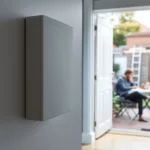
Related internal resource solar battery vs grid electricity Germany.
Key UK rules shaping home battery safety
For a UK homeowner, home battery safety UK regulations are mainly about where the battery goes, how it is wired, and how fire risk is controlled. Several overlapping rules and standards apply, but each one pushes your installer toward safer design choices rather than leaving it to guesswork.
| Rule/standard | Covers | Who it affects | Key impact |
|---|---|---|---|
| PAS 63100:2024 | Fire and placement | Homeowners & designers | Where batteries can be sited |
| BS 7671 Ch.57 | Wiring safety | Electricians | How systems are connected |
| Building Regs B & P | Fire & electrics | Owners & builders | Building work compliance |
| DNO + MCS/NICEIC | Grid and sign-off | Installers | Approval and certification |
| CE/UKCA & manuals | Product design | Manufacturers | Which products are allowed |
PAS 63100:2024 is a new fire safety code for domestic energy storage. In practice it steers batteries away from bedrooms and escape routes, encourages separation from habitable rooms (e.g. garage, utility, outside cabinet) and calls for fire-resistant construction around indoor units. Many installers now treat it as the benchmark for deciding suitable locations and clearance from doors, windows, and parked vehicles, as highlighted in industry overviews such as this summary of new UK storage requirements.
BS 7671 (IET Wiring Regulations) Amendment 4, Chapter 57 sets the electrical safety rules for energy storage systems: cable sizing and protection, isolation switches, earthing arrangements, fault protection, and how the battery interacts with PV inverters and the grid. For a homeowner, this mainly means only a competent electrician can design and install the system, and they must follow manufacturer instructions rather than improvising.
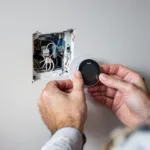
Related internal resource home battery savings Germany calculator.
Where you can and cannot put a home battery
Under current UK guidance, including PAS 63100:2024 and fire-service briefing notes, home batteries are treated as a potential fire and smoke source. That shapes clear placement rules: keep them away from where people sleep or may be trapped, mount them on suitable walls, and avoid heat build-up.
| Location | Usually OK? | Main condition | Risk note |
|---|---|---|---|
| Garage | Often | Fire-resistant wall, clearances | Car + fuel nearby |
| Utility room | Often | Not an escape route | Extra smoke detection |
| Outside wall | Often | Weather-rated, shaded | Secure from impact |
| Loft | Rarely | Engineer + fire sign-off | Hard to access |
| Bedroom/hall | No | Choose another room | Blocks escape paths |
Places normally ruled out under home battery safety UK regulations and PAS 63100-style guidance:
- No bedrooms or adjoining dressing rooms; avoid any room primarily used for sleeping.
- No escape routes: landings, main stairs, narrow hallways, or under-stairs cupboards that form the only way out.
- No cramped cupboards with poor ventilation, especially under stairs, unless specifically designed as a protected fire-resisting enclosure.
- No locations with high ambient temperature (boiler rooms that run hot, south-facing glass porches, next to radiators or cookers).
Commonly acceptable locations, assuming installer design and BS 7671 compliance:
- Attached or detached garages, with the battery on a solid masonry wall, above expected flood level, and clear of cars and stored fuels.
- Utility rooms or plant rooms that are not sleeping spaces or escape routes, with good access for firefighters and maintenance.
- External house walls or small outbuildings, using IP-rated outdoor models, shaded from direct sun and away from bedroom windows where practicable.
- Mount on non-combustible or fire-resistant construction (block, brick, or a fire-lined stud wall, as the manufacturer specifies).
- Keep minimum side, top and front clearances stated in the manual; leave enough space to remove covers and isolate switches safely.
- Provide ventilation paths so warm air can escape; in small rooms that might mean a vent grille or louvred door to prevent heat build-up.
- Avoid direct summer sun on outdoor units; PAS-aligned advice and manufacturer data usually assume shaded or north/east aspects.
Fire, ventilation and emergency access essentials
Fire-safe home batteries in the UK are designed around three pillars: early warning, separation from ignition risks, and clear emergency access. Most guidance and emerging home battery safety UK regulations (PAS 63100:2024, BS 7671, Building Regulations, and insurer conditions) now assume a dedicated battery area with basic fire precautions and good ventilation.
For domestic fire protection, locate heat or smoke detectors in the battery room or adjacent circulation space (landing, utility, integral garage lobby), interlinked with your main alarms. Keep the battery separated from parked vehicles, fuel cans, LPG cylinders, log stores and paints; where batteries sit in garages, aim for a clear zone around the unit and avoid mounting directly above car bonnets or fuel storage. Cable routes should be short, mechanically protected and fire-resilient where they pass through escape routes or cavities, following BS 7671’s requirements for support and segregation from data or combustible materials.
Safe isolation is critical during a fault or fire. Your installer should provide labelled AC and DC isolators that are obvious, reachable and not hidden behind appliances or stored items. Clear, durable labels should identify: battery location, main DC isolator, emergency shutdown sequence, and any shut-off that also kills lighting or life-safety systems.
Installation quality, certifications and paperwork
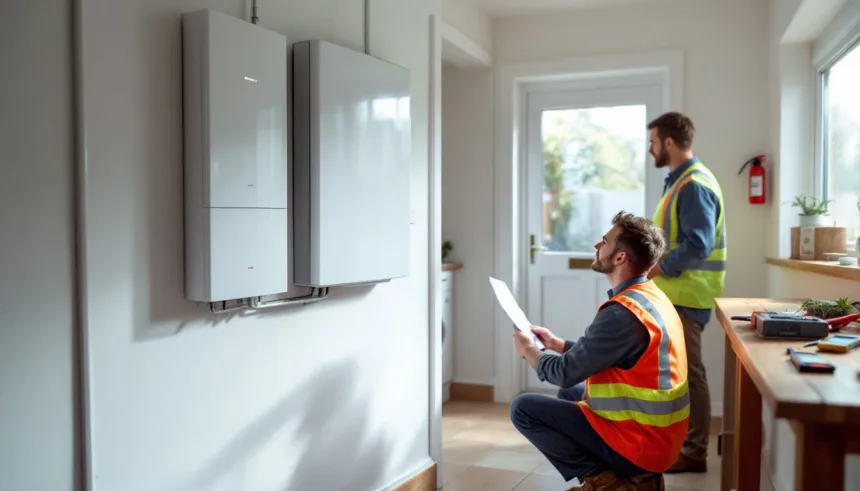
For a safe, compliant installation, responsibility is shared. The system designer must size and specify the home battery, inverter, protection devices and cable routes in line with BS 7671 and manufacturer limits. The installer must then follow that design, install to BS 7671 and PAS 63100, complete test results, and leave the system in a condition that satisfies Building Regulations and the Distribution Network Operator (DNO). Once commissioned, the homeowner becomes responsible for using the battery as intended, arranging periodic checks, and keeping all paperwork for insurance and resale.
In practice, quality home battery safety compliance in the UK is usually delivered by an MCS-certified company and a person registered with NICEIC, NAPIT or a similar body. They should handle DNO approval (G98/G99 forms), Part P Building Control notification, commissioning tests and labelling. You should be given operating and emergency instructions that reflect UK fire-service guidance, plus clear shut-down steps. For Germany, look for installers who work to VDE standards and know local fire-brigade rules, but the same principles apply: qualified designer, certified installer, documented commissioning, and informed homeowner.
| Item | What to check | Who provides | Why it matters |
|---|---|---|---|
| Installer status | MCS + NICEIC/NAPIT | Installer | Shows competence |
| DNO approval | G98/G99 letter/email | Installer/DNO | Grid connection legality |
| Part P/Building Control | Compliance certificate | Installer/scheme | Meets Building Regs |
| Electrical test results | Signed BS 7671 forms | Installer | Proves safe wiring |
| Manuals & emergency guide | Manufacturer + site notes | Installer | Safe use & shutdown |
Common home battery risks and how to avoid them
Most modern home batteries using LiFePO4 cells are inherently safer than older nickel-manganese-cobalt lithium-ion chemistries, but UK rules still treat them as a potential fire and shock risk. Practical risk management combines correct product choice, compliant installation and simple household habits.
Overheating is the key concern. PAS 63100:2024 steers systems away from bedrooms and escape routes and expects clear airflow gaps and temperature monitoring. In practice that means using only certified systems, mounting on a non-combustible wall where possible, keeping the manufacturer’s clearance distances, and avoiding clutter around the unit. LiFePO4 packs are less prone to thermal runaway, but they still rely on a stable ambient temperature and a functioning battery management system.
Poor wiring and overloading are controlled by BS 7671, which requires dedicated circuits, correctly sized MCBs/RCBOs and RCD protection, instead of trailing leads and multi-way adaptors. Never extend a battery circuit with DIY junction boxes or plug-in inverters; any change should go through a competent electrician who will update circuit schedules and labelling.
Insurance, warranties and planning considerations
Insurers and mortgage lenders increasingly expect home battery systems to follow recognised safety standards, even if they never use the phrase “home battery safety UK regulations” on the phone. They look for evidence that the system complies with UK wiring rules (BS 7671), relevant fire-safety guidance and, for new installs, emerging standards such as PAS 63100:2024 and manufacturer instructions.
You usually don’t need a specific “battery permit”, but you must tell your home insurer and, if applicable, your buy-to-let or block policy holder. Typical questions include:
- Make, model, capacity and installer details
- Location (garage, utility, outside wall) and distance from bedrooms
- Whether it is AC or DC coupled and linked to solar
- Evidence of competent installation (MCS/RECC or NICEIC/NAPIT certificates)
Non-disclosure, DIY wiring or ignoring siting guidance (for example, putting a battery in a loft or escape route against fire-service advice) can give insurers grounds to reduce or reject a claim after a fire. Some lenders also require proof that work complies with Building Regulations Part P and BS 7671 before releasing funds or approving remortgages.
Frequently Asked Questions
How safe are home battery systems?
Modern home battery systems are very safe when installed and maintained correctly under UK home battery safety regulations. Serious failures are rare compared with common household risks like cooking fires.
What are the rules for battery safety?
Key UK home battery safety regulations expect: certified equipment (CE/UKCA, often IEC/EN 62619), wiring to BS 7671, correct fuses and RCDs, isolation switches, and clear labelling. PAS 63100:2024 and fire-service guidance add rules on safe placement, fire separation, and ventilation.
What is the best battery technology for a home?
For most UK homes, lithium iron phosphate (LiFePO4) is currently the best balance of safety, life span, and cost. It is more thermally stable and less prone to fire than older NMC lithium-ion, with a longer cycle life.
Should solar batteries be inside or outside?
UK guidance allows either, but home battery safety regulations and PAS 63100 favour locations with fire separation from main living spaces. Indoors, a utility room or integrated garage with solid walls and clear access works well.
Outdoors, weather-rated cabinets on a solid wall away from bedrooms and escape routes reduce risk.
Where is the safest place to store lithium batteries at home?
The safest place is a cool, dry, well-ventilated area away from bedrooms and main escape routes, ideally on a non-combustible surface with some fire separation, such as a utility room or attached garage.
Home battery safety UK regulations exist to prevent the rare but serious risks that come with storing kilowatt-hours of lithium chemistry indoors. By confirming your installer follows PAS 63100:2024 placement rules, meets BS 7671 electrical protection thresholds, and provides you with a maintenance schedule and emergency shut-off plan, you turn compliance into a practical safety net rather than paperwork.
Use the room-by-room checklist and installer questions in this guide during your site survey, keep your commissioning certificate accessible for insurers, and schedule annual visual inspections. A compliant, well-sited battery system will deliver years of reliable backup and bill savings without the hidden liability of an under-specified installation.