



A home battery is a large rechargeable unit, typically lithium-ion, installed in your house that stores electricity for later use. It charges from solar panels, the grid during off-peak hours, or both, then discharges when electricity is expensive, unavailable, or when you want to maximise self-consumption of renewable energy.
- What is a home battery in simple terms?
- How a home battery system actually works
- Common ways people use home batteries
- Key benefits and drawbacks to know first
- When a home battery pays off financially
- Home batteries without solar panels
- Battery types, size and lifespan basics
- How to decide if a home battery fits your home
- Frequently Asked Questions
In the UK and Germany, home batteries are most often paired with rooftop solar to capture surplus daytime generation, though standalone batteries can also exploit time-of-use tariffs or provide backup during outages. This guide explains what a home battery is, how the technology works, typical use cases, solar storage, EV charging, heat-pump integration, and tariff arbitrage, and the basic economics that determine whether a system pays for itself.
You’ll find a comparison table of common configurations, simple rules of thumb for sizing, and practical next steps to help you decide if a battery fits your home and budget.
What is a home battery in simple terms?
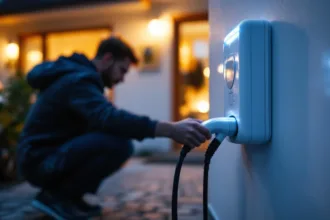
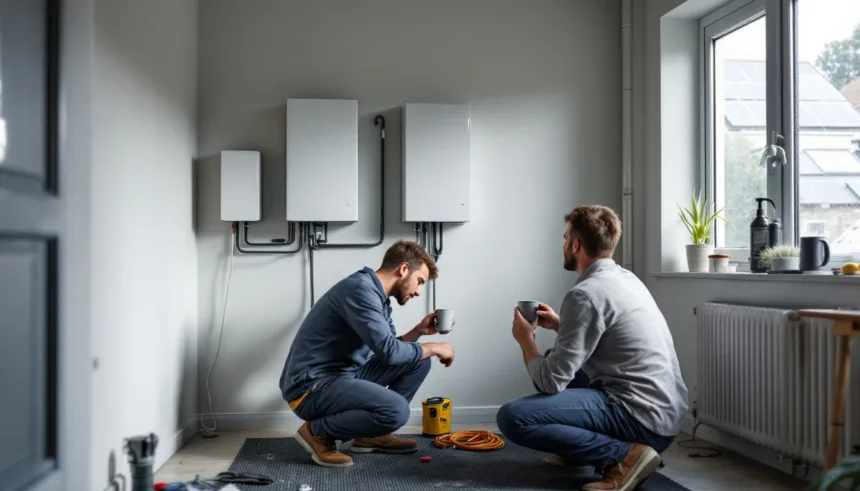
In simple terms, a home battery is a rechargeable box that stores electricity so you can use it later instead of drawing everything from the grid. When people ask “what is a home battery,” they usually mean a wall-mounted or floor-standing unit, about the size of a large suitcase or slim fridge, wired into the home’s consumer unit by an electrician.

The battery charges from one or more sources: solar panels on your roof, cheap off-peak grid electricity, or occasionally from a home EV charger. A control unit and inverter sit between the battery and your electrics, automatically deciding when to charge and when to discharge power to your lights, sockets, heat pump, or EV. Many systems also connect to a smartphone app or home energy management system so you can see state of charge, set schedules, and track savings.
Most modern home batteries use lithium-ion chemistry and are designed to work safely for 10-15 years under normal conditions, with built-in electronics that manage temperature, prevent over-charging, and isolate the system during faults.
How a home battery system actually works
If you are asking what is a home battery in practical terms, it is a rechargeable unit that stores electricity so you can use more of your own solar or cheaper off-peak power instead of buying at peak prices. It sits between your solar panels, home circuits, and the grid, managing when to charge and discharge.
The core components are the battery pack (usually 5-20 kWh in the UK and Germany), a hybrid or separate inverter (3-10 kW typical power rating), a smart meter or tariff from your supplier, and a monitoring app or control gateway. The inverter is crucial: it converts the DC electricity from solar panels and the battery into AC for your home and back again for charging.
During the day, solar generation first supplies your home’s demand. Any surplus is routed through the inverter to charge the home battery. Once the battery is full, remaining excess is exported to the grid under your local export or feed-in arrangement. If there’s no solar (cloudy days or at night), the battery can instead charge from the grid when time-of-use tariffs are cheap.
Later, typically in the evening peak when prices rise or solar drops, the battery discharges automatically to power appliances, EV chargers at low power, or even part of a heat pump’s load.
Common ways people use home batteries
Households use home batteries in five main ways, often combining several at once. The most common is maximising solar self-consumption: a 5 kW rooftop array on a sunny June day in southern England might generate 25 kWh, but a typical family uses only 8 kWh during daylight hours. A 10 kWh battery stores the surplus, then releases it after sunset to cover evening cooking, lighting, and entertainment, raising self-consumption from 30 % to 70 % or more.
Load-shifting with time-of-use tariffs is equally popular. On Octopus Agile or Economy 7, the battery charges overnight when electricity costs 7-9 p/kWh and discharges during peak hours (16:00-19:00) when rates hit 30-40 p/kWh, cutting bills by £300-500 annually without solar panels.
EV charging support lets owners charge a car from stored solar or cheap off-peak power, avoiding expensive daytime grid rates. A 10 kWh battery can add roughly 40 miles of range to a typical electric vehicle. Heat-pump integration works similarly: the battery powers a heat pump during expensive peak periods using energy stored earlier, reducing running costs by 20-30 %.
Key benefits and drawbacks to know first
Understanding the pros and cons before adding a home battery helps you judge whether storage fits your UK or German setup, from solar and EVs to heat pumps and time-of-use tariffs.
Key benefits include lower bills, especially when paired with solar PV or dynamic tariffs. You can store daytime solar instead of exporting it cheaply, then use it in the evening when prices or grid carbon are higher. In the UK, batteries increasingly help shift use away from expensive peak periods; in Germany, they reduce reliance on the grid and let you keep more of your self-generated power. A battery can also support EV charging and heat pumps by smoothing peaks, reducing main fuse upgrades and making better use of off-peak electricity.
Resilience is another advantage. In rural parts of the UK and Germany, a battery that supports backup can keep lights, internet and key appliances running through short outages. For some buyers the main value is future-proofing: once you electrify heating and transport, demand rises sharply, and storage gives flexibility to react to new tariffs, grid services and regulation.
When a home battery pays off financially
For most households asking whether a home battery is worth it in the UK or Germany, the maths depends on three things: installed cost, how much expensive grid electricity you avoid, and how consistently you can cycle the battery. Typical turnkey prices for a 5-10 kWh system sit roughly in the £4,000-£9,000 range in the UK and €5,000-€10,000 in Germany, with larger systems towards the top of those bands.
Payback is usually fastest when a battery is paired with solar and used daily. A UK solar home with a 6 kWh battery, saving about 8-12 kWh per day at a 25-35p peak rate, might see simple payback in roughly 8-12 years if the system is well sized and actively managed. In Germany, where household tariffs are often higher but export terms can differ, similar solar-plus-battery setups can reach comparable or slightly shorter paybacks if the battery is cycled regularly. In both markets, returns are weaker if the battery mostly sits idle or is oversized.
Battery-only “time-of-use arbitrage” (charging off-peak, discharging at peak) can work but is more marginal. A 5 kWh battery in the UK might save 50-80p per day with a 15-20p/kWh off-peak vs 30-35p/kWh peak spread, translating into simple paybacks that can stretch beyond 10-12 years before degradation and maintenance.
| Setup | Country | Tariff spread | Payback tendency |
|---|---|---|---|
| Solar + battery | UK | Medium | Often 8-12 years |
| Solar + battery | Germany | Medium, high | Often 7-11 years |
| Battery only | UK | Low, medium | 10+ years common |
| Battery only | Germany | Low, medium | 10+ years common |
| Solar + battery | Either | High | Can shorten by ~2 years |
Home batteries without solar panels
Without panels on the roof, a home battery is mainly a tariff arbitrage tool: you charge it from the grid when electricity is cheap (often overnight) and use that stored power when prices spike in the evening. In the UK this usually means pairing a battery with a time-of-use tariff like Economy 7 or agile-style deals; in Germany it can work with dynamic day-ahead pricing that has big swings between night and peak periods.
For EV drivers, a home battery can smooth charging so you pull more from cheap-rate electricity and less from peak; in practice, though, most modern EV tariffs already offer low overnight rates for the car itself, so the car battery often beats a stationary battery on cost per kWh. The exception is when you want to protect your circuit capacity (e.g. limited main fuse) or stack multiple loads at once. Similarly, for heat pump owners, a battery can let you pre-charge at night and run some daytime heating or hot water from stored cheap power, especially in winter when solar is weak.
Battery types, size and lifespan basics
Most modern home batteries are lithium-ion packs similar to an EV battery, controlled by electronics that manage charging, discharging and safety. The two main chemistries you’ll see in UK and German homes are lithium iron phosphate (LFP) and nickel manganese cobalt (NMC). Both are compact and efficient, but they behave slightly differently over their lifetime.
LFP batteries are generally considered the more stable option thermally, with lower fire risk and very long cycle life. Many LFP systems are rated for around 6,000-10,000 full cycles, which can translate to 10-15 years of daily use if looked after correctly. NMC batteries usually offer more energy in the same volume and are common where space is tight, but they may have somewhat shorter warranted cycle life.
Typical usable capacities for a home battery range from about 5 kWh for a small flat or low-demand home, through 10-15 kWh for average households, up to 20 kWh or more if you have solar, an EV and a heat pump. “Usable” is important: systems rarely let you discharge 100%, so a 10 kWh battery might offer 8-9 kWh usable to protect lifespan.
How to decide if a home battery fits your home
Start by gathering your last 12 months of electricity bills. Note total kWh used per year, your day/night or peak/off-peak prices, and any standing charges. A home battery makes most sense if you have high evening use, a big gap between peak and off-peak prices, or already export a lot of solar.
Check your metering and tariff options. Confirm you have or can get a smart meter, since most time-of-use and export tariffs require one. In the UK, look at off-peak EV or “night saver” tariffs; in Germany, check whether your local utility offers variable tariffs and how they treat stored solar for feed-in payments.
Review your solar and space potential. If you already have PV, look at how many kWh you export in summer; that is a rough upper limit for useful battery charging from solar. Without PV, estimate roof suitability or planned array size. Then check where a battery could go: a dry, ventilated utility room, garage, or basement, with wall space and safe cable routes to your main consumer unit.
Authoritative resource: FAQs For Home Batteries.
Frequently Asked Questions
What is a home battery?
A home battery is a fixed, wall-mounted or floor-standing system that stores electricity for later use, usually from your solar panels or from the grid on cheap tariffs. Unlike small portable batteries, it connects permanently to your home’s electrics to run appliances during the day, evening, or power cuts.
Do home batteries pay for themselves?
Whether a home battery pays for itself depends mainly on installed cost, your electricity tariffs, solar system size, how much stored energy you actually use, and export payments.
Which home battery is the best in the UK?
There is no single best home battery in the UK because needs and tariffs differ. Focus on price per kWh of storage, length and depth of the warranty, power rating for running big loads, and compatibility with your solar inverter or EV tariff.
Is it worth getting a home battery without solar panels?
A home battery without solar can work where there are strong time-of-use or dynamic tariffs, high evening consumption, EV charging, or electric heating and heat pumps.
Is Tesla Powerwall the best battery?
Tesla Powerwall is a popular home battery with high usable capacity, strong app integration, and good backup options, but it is not automatically the best for every home.
A home battery stores electricity so you can use it when it matters most, during peak tariff windows, after sunset, or when the grid fails. Whether you pair it with solar, charge overnight on a cheap rate, or integrate it with an EV or heat pump, the value depends on your electricity price spread, usage pattern, and upfront cost.
Run the numbers for your own tariff and consumption, compare at least three quotes, and check warranty terms and round-trip efficiency before committing. Done right, a home battery cuts bills, increases energy independence, and future-proofs your household against rising grid prices.