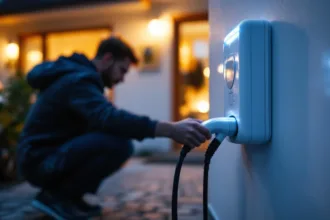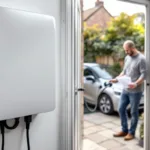





AI smart home energy management is worth it for UK and German households that already own, or plan to install, smart heating, an electric vehicle charger, or solar panels with a battery, where realistic annual savings sit between 10 and 30 per cent of total energy spend. If your home still relies on manual thermostats, no EV, and grid-only electricity, the payback period stretches beyond five years and the juice rarely justifies the hardware cost.
- Is AI smart home energy management worth it?
- How AI smart home energy management works
- Realistic savings and payback in UK and Germany
- Who gets the most value from AI energy control
- What it costs and the tech you actually need
- Tariffs, incentives and future-proofing in UK and DE
- Risks, drawbacks and how to avoid disappointment
- Step-by-step plan to get started sensibly
- Frequently Asked Questions
This guide walks you through the numbers that matter: typical savings bands by home profile, the equipment combinations that deliver measurable returns, payback timelines under current tariff structures, and a staged action plan that prevents you from buying sensors and hubs you don’t need. You’ll see exactly which setups cross the worthwhile threshold and which remain expensive experiments.
Is AI smart home energy management worth it?
For most UK and German homeowners with high electricity use, an EV, heat pump, or solar, AI smart home energy management is usually worth it. In typical cases, software or hardware subscriptions costing £5-£25 / €5-€25 per month can unlock 10-25% cuts in electricity bills by shifting usage to cheaper times, avoiding peak tariffs, and making better use of self-generated solar.
Broadly, expect these annual savings bands if you choose AI smart home energy management:

- UK, no solar, typical home: ~£80-£200 saved, mainly from smarter heating and time-of-use tariffs.
- Germany, no solar: ~€120-€250 saved, helped by high unit prices and avoided peaks.
- UK or Germany with EV only: ~£/€200, £/€400 saved by optimising overnight charging and dynamic tariffs.
- Heat pump + smart controls: ~10-20% heating cost reduction, often £/€150, £/€350 per year.
- Solar + battery + AI: ~£/€250, £/€600 saved by maximising self-consumption and cheap off-peak charging.
Simple app-based optimisation with a smart thermostat (see what is a smart thermostat AI ) or EV charger can pay back in 6-24 months through lower bills.
Related internal resource what is a smart thermostat AI.
How AI smart home energy management works
AI smart home energy management systems use software, sensors, and connected devices to decide when and how your home uses electricity, heat, and stored energy. In practice, they sit between your smart meter, your heating system, solar inverter, battery, and EV charger, then apply algorithms to cut waste and shift usage to cheaper, cleaner times. When people ask “is AI smart home energy management worth it?”, they’re really asking whether this automated orchestration can save more money and hassle than a basic timer or manual control.
The core ingredients are simple. First, data: the system reads smart meter data (near real-time power use and tariffs), indoor and outdoor temperature, sometimes weather forecasts, plus status from devices such as a heat pump, boiler, or EV charger. Second, connectivity: smart plugs, smart thermostats, and compatible inverters or batteries give the AI something it can actually switch on or off, turn up or down, or delay. Third, algorithms: the software learns patterns in your routine (when you’re usually home, when you shower, when you charge the car), then predicts demand and chooses the cheapest or most efficient way to meet it.
Realistic savings and payback in UK and Germany
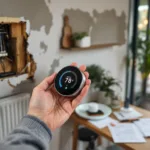
For most households in the UK and Germany, AI smart home energy management is worth it only when bills are already substantial or there’s flexible load to shift (heat pumps, EVs, or hot-water storage). Software itself is often low-cost or bundled into hardware; the real question is how fast the analytics and automation pay back the extra kit.
Typical annual electricity use assumptions below: small flat ~2,500 kWh, family home ~4,000-4,500 kWh, high-use home with EV/heat pump ~7,000-10,000 kWh. Where a range is given, the lower end reflects cautious behaviour and flat tariffs; the upper end assumes time-of-use or dynamic tariffs and well-tuned automations.
| Home & setup | Country | Typical extra kit cost | Annual saving band | Simple payback |
|---|---|---|---|---|
| Gas boiler, no EV/solar | UK | £150-£300 | £30-£70 | 3-8 years |
| Gas boiler, no EV/solar | Germany | €200-€350 | €40-€90 | 3-7 years |
| Heat pump, TOU tariff | UK | £250-£600 | £120-£260 | 2-5 years |
| Heat pump, dynamic tariff | Germany | €300-€700 | €160-€320 | 2-4 years |
| Heat + EV + solar/battery | UK or DE | £/€600, £/€1,200 | £/€250, £/€550 | 2-4 years |
For a UK family home on a flat tariff, AI scheduling and room-by-room control might trim 10-15% off a £900 annual electricity bill (around £90-£135). Add a heat pump and time-of-use tariff and savings can rise toward 15-25%, mainly by pre-heating when prices are low and letting the thermal mass coast through peaks.
Who gets the most value from AI energy control
AI smart home energy management is most worth it when a household has several big, shiftable loads and pays high unit prices for electricity or gas. In the UK and Germany that usually means a larger, well-insulated home, electric heating or a heat pump, and at least one extra high-draw device such as an EV charger or home battery. Smaller flats with gas boilers and limited control points can still benefit, but the savings band is usually narrower and payback longer.
Owner-occupiers see more value than renters, because they can install hard-wired devices (smart thermostats, load controllers, battery integration) and recoup the cost over many years. AI control tends to reward predictable routines: commuters away all day, EVs parked overnight, or families with set meal and shower times. Households at home all day still gain from optimised flow between solar, battery, and heat, but have less scope for deep setbacks or aggressive off-peak shifting. In both the UK and Germany, the combination of time-of-use tariffs plus AI scheduling is often the decisive factor that turns a marginal upgrade into a clearly positive investment.
| Home / user type | Typical UK / DE setup | AI value level | Main reason |
|---|---|---|---|
| Detached, heat pump, EV, solar+battery | High use, dynamic tariff | Very high | Large loads, shiftable |
| Detached, gas boiler, EV | Gas heat, smart charger | Medium, high | EV shifting saves most |
| Flat with gas heating | Limited controls | Low, medium | Few controllable loads |
| Home all day, solar only | Daytime self-use | Medium | Optimises solar use |
| Renter with plug-in devices | Smart plugs, no boiler | Low | Smaller, slower savings |
What it costs and the tech you actually need
To get started with AI smart home energy management you do not need to buy everything at once. Costs break into three layers: core controls (heating, key appliances), optional big-ticket items (EV, solar, battery), and the software or Home Energy Management System (HEMS) that ties it together.
A minimum viable setup for a UK or German home usually means: a smart thermostat for gas or heat-pump control, a handful of smart plugs for always-on devices, and either a free utility app or low-cost HEMS app. Expect roughly £180-£320 in the UK or €200-€350 in Germany for this starter stack, assuming professional thermostat installation. Many energy suppliers now bundle the thermostat and basic app controls into a tariff, which can reduce upfront cost but may lock you into their ecosystem.
| Item | Role | UK cost | DE cost |
|---|---|---|---|
| Smart thermostat | Heat control + schedules | £120-£250 | €140-€260 |
| Smart plugs (3-5) | Switch standby loads | £30-£80 | €35-€90 |
| HEMS hub / gateway | Links devices, cloud AI | £80-£250 | €90-€260 |
| Smart EV charger | Shift EV to cheap hours | £700-£1,200 | €800-€1,300 |
| Solar + battery | Store cheap or solar kWh | £5,000-£12,000 | €6,000-€13,000 |
Tariffs, incentives and future-proofing in UK and DE
In the UK and Germany, the real value from AI smart home energy management comes from how well it works with tariffs and incentives, not just the hardware itself. As tariffs become more dynamic and export rules more complex, an AI layer can time-shift usage, charging and exports so your system quietly earns and saves more in the background.
In the UK, time-of-use deals like Octopus Go, Intelligent Octopus, Agile and other EV or dynamic tariffs reward you for using power overnight or when wholesale prices fall. An AI energy manager can pre-heat your home, charge your EV and top up a home battery in cheap slots, then run on stored energy in peak hours. If you export from solar panels, it can choose between self-consumption and exporting to a Smart Export Guarantee tariff when rates are attractive.
Germany increasingly uses dynamic or flexible tariffs linked to the day-ahead market, while traditional feed-in tariffs for solar have fallen.
Risks, drawbacks and how to avoid disappointment
AI smart home energy management can pay off, but there are real drawbacks if you pick the wrong products or expect too much, too fast. Most issues fall into six buckets: complexity, data and privacy, vendor lock-in, reliability, rebound effects, and overestimated savings.
Complexity is the first trap. Some hubs and apps feel like beta software: confusing dashboards, too many settings, and poor integration with existing boilers or heat pumps. That often leads to features being disabled or ignored. To reduce this risk, prioritise systems that support your current kit (or popular UK/German brands), offer clear “set-and-forget” modes, and have strong online documentation plus local-language support.
Data privacy and surveillance worries are justified. These systems often track occupancy, schedules and appliance use. Risks rise when data is stored in unclear jurisdictions or shared with third parties. Before buying, read a short checklist: is there a clear privacy policy, EU/UK GDPR compliance, the option to store data locally or minimise it, and multi-factor authentication on the account? If any answer is no, treat it as a red flag.
Step-by-step plan to get started sensibly
- Audit your energy profile. Review twelve months of bills to identify your largest consumption categories, typically heating, hot water, EV charging, and always-on appliances. Note peak-rate hours if you’re on a time-of-use tariff; this reveals where automation delivers the highest savings.
- Prioritise one high-impact use case. Start with heating if it accounts for over 50 % of your bill, or EV charging if you drive daily and pay peak rates. For homes with solar or battery storage, focus on self-consumption optimisation first. Avoid spreading budget across too many devices at once.
- Choose a compatible ecosystem. Select a platform (Google Home, Apple HomeKit, or open-source Home Assistant) that supports your priority devices and offers AI scheduling or learning features. Check that your smart thermostat, charger, or inverter integrates natively to avoid fragmented control.
- Install and test core automations. Set up occupancy-based heating schedules, off-peak EV charging windows, or solar export limits. Run each rule for two weeks, compare kWh data against your baseline, and adjust trigger times or temperature thresholds to match real household patterns.
- Layer in predictive optimisation. Once manual automations prove stable, enable AI features, weather-adaptive preheat, dynamic load-shifting, or battery discharge forecasts. Monitor monthly savings and refine settings quarterly as tariffs, occupancy, or vehicle use evolves.
Authoritative resource: A systematic review of context-aware and AI-driven home ….
Frequently Asked Questions
What are the benefits of using AI in smart homes?
For UK and German homeowners, AI smart home energy management is worth it mainly for lower bills and less hassle. It can pre-heat with cheap off-peak electricity, slow down heating when rooms are empty, and time EV charging to night tariffs.
What is an AI-based smart energy management system?
An AI-based smart energy management system is software that learns how your home uses and produces electricity and then controls devices to cut costs and waste.
How is AI used in energy management?
AI in home energy management forecasts how much power you will need and when, predicts solar generation, and plans when to run flexible loads.
How to effectively use smart home devices for energy saving?
Start with heating, hot water and EV charging, as these dominate energy use. Connect your smart thermostat, heat pump, and charger to one app where possible.
Create routines for workdays, weekends and holidays, enable occupancy and open-window detection, and link to your time-of-use tariff.
Are smart home systems worth it?
AI smart home systems are usually worth it if you have electric heating, time-of-use tariffs, an EV, or rooftop solar, because automation can unlock savings you will not manage manually. In smaller or gas-only homes, gains are modest, so stick to a good smart thermostat first.
AI smart home energy management delivers genuine value when layered onto heating systems, EV chargers, or solar-plus-battery installations that already exist or sit in your near-term plan; outside those scenarios, manual scheduling and basic timers often achieve similar results at a fraction of the cost. Start with one high-impact device, usually a smart thermostat with AI or an EV charger that responds to tariff windows, measure your first quarter of savings, then expand only if the data confirms the business case.
Skip the all-in-one bundles until you know which energy flows actually move your bill, and remember that the best system is the one you’ll still use in two years without constant troubleshooting.