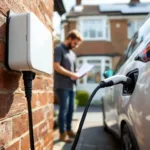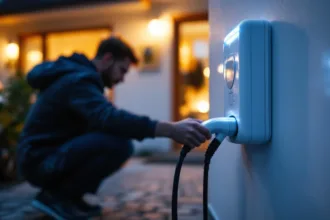




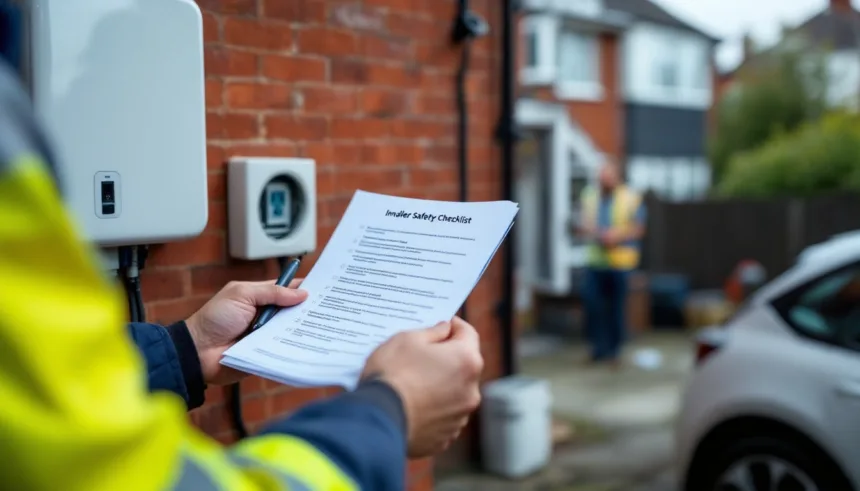
Installing a home EV charger in the UK or Germany means navigating a web of safety standards, certification marks, and installer qualifications that most homeowners encounter for the first time. Both countries enforce strict rules to protect against electrical faults, fire risk, and grid overload, but the labels, testing protocols, and legal requirements differ in ways that matter when you compare quotes or shop online.
- EV charger safety standards in UK and Germany
- EV Charger Safety Standards UK Germany
- Key German rules for safe home EV chargers
- Core international EV charger safety standards to know
- Safety labels and certifications to check before buying
- Installer requirements and what a safe install looks like
- Comparing UK vs Germany: where standards differ
- Ongoing safety checks, maintenance and common mistakes
- Frequently Asked Questions
- What is the ISO standard for EV chargers?
- What are the requirements for EV charger installation in the UK?
- Which country has the best EV charging infrastructure?
- What is the first step in EV charger safety standards UK Germany?
- How do homeowners know whether EV charger safety standards UK Germany is worth it?
This guide translates EV charger safety standards UK Germany into a practical checklist: which certification marks confirm a unit meets local regulations, what your installer must demonstrate before connecting to your supply, and how to spot red flags in product listings or contractor proposals. Whether you’re comparing a CE-marked charger shipped from Europe or verifying that a UK installer holds the right accreditation, understanding these standards ensures your investment is safe, compliant, and eligible for any available grants or insurance cover.
EV charger safety standards in UK and Germany
For a homeowner, EV charger safety standards in UK Germany boil down to two layers: international product rules that keep the hardware safe, and national wiring regulations that control how it is installed and protected in your home.
Most quality home wallboxes in both countries are designed to comply with shared IEC standards, especially IEC 61851 (EV supply equipment) and IEC 62196 (plugs and sockets). These cover electrical safety, overheating, shock protection and communication between car and charger. When you see a properly tested unit, it should carry CE marking plus evidence of certification against these IEC rules from a recognised test house.
On top of that, each country adds its own installation rules. In the UK, the key documents are the IET Wiring Regulations (BS 7671), the Building Regulations and specific guidance for EV charge points, including requirements for RCD protection, PME earthing solutions, and safety measures against \
Related internal resource EV charger home battery combo worth it.
EV Charger Safety Standards UK Germany
The core EV charger safety standards UK Germany buyers should know start with BS 7671 (IET Wiring Regulations). In the UK, home charge points must meet BS 7671, especially Section 722, which sets rules for dedicated EV circuits, cable sizing, and disconnection times so a fault cuts power before you can receive a serious shock.
Section 722 also demands suitable RCD protection (typically Type A or B with 30 mA sensitivity) and either built-in or separate PEN fault protection for most installations with a TN-C-S (PME) supply. PEN devices monitor the supply and disconnect the charger if the combined neutral, earth conductor fails, helping to avoid dangerous “live” car bodies. Since 18th Edition Amendment 2, surge protection devices (SPDs) are normally required unless a documented risk assessment shows they are unnecessary.

On top of wiring rules, UK smart charge regulations (in force since 2022) require most domestic charge points to be “smart”: they must default to off-peak schedules, support remote updates, and include basic cybersecurity and data protections. This matters for safety as firmware updates can patch issues and prevent tampering.
Using OZEV-approved hardware and an OZEV-registered installer is not a legal requirement in every case, but it is a strong safety filter. OZEV approval means the charger has been assessed to relevant product and communication standards, and registered installers are vetted, insured electricians who understand Section 722, RCD and PEN requirements.
| Requirement | UK Rule | What You Check |
|---|---|---|
| Wiring regs | BS 7671 Sec. 722 | On installation certificate |
| RCD | 30 mA, Type A/B | On device label |
| PEN protection | Required on PME | Built-in or separate box |
| Surge protection | SPD usually required | Shown on consumer unit |
| Smart rules | Since 2022 | Sold as “smart” with app |
Related internal resource charge EV without driveway UK.
Key German rules for safe home EV chargers
In Germany, safe home wallboxes sit inside a dense web of VDE rules, grid-operator requirements and the broader policy context that also shapes public charging. Even if you only charge at home, the expectations behind EV charger safety standards in the UK Germany discussion are directly relevant when you choose hardware and an installer.
| Area | Main rules | What it means | Your action |
|---|---|---|---|
| Grid connection | VDE-AR-N 4100 | Limits load, defines safety | Use a certified electrician |
| PV/storage link | VDE-AR-N 4105 | Controls export & safety | Check charger, inverter match |
| RCD protection | VDE 0100-722 | Requires DC fault detection | Confirm RCD type/solution |
| Grid operator | EnWG, TAB | Sets notify/approval duty | File forms before install |
| Public standards | LSV, IEC 61851 | Shape hardware quality | Choose IEC/CE marked unit |
For most homes, VDE-AR-N 4100 is the backbone: it defines technical connection rules for low-voltage customers. A wallbox above 3.6 kW must be notified to the local Netzbetreiber, and larger units (commonly 11-22 kW) may need explicit approval. Your electrician usually handles this, but you remain responsible for using only approved hardware and not bypassing the process.
VDE 0100-722 and related parts of DIN VDE 0100 set expectations for residual current protection. Practically, this means either a Type B RCD in the distribution board or a wallbox with integrated DC fault detection plus at least a Type A RCD upstream. Before signing a quote, ask the installer which RCD concept they are using and where it will be placed.
Core international EV charger safety standards to know
Most home chargers sold in Europe quietly follow the same core international EV safety standards, even if the box only highlights “CE” or “Type 2”. Understanding a few names, especially IEC 61851, IEC 62196 and ISO 15118, helps you compare products and sanity-check datasheets in both the UK and Germany.
| Standard | Covers | What it means for you | Where you see it |
|---|---|---|---|
| IEC 61851 | Charging system | Safe power control, shut-off | Datasheet, manual |
| IEC 62196 | Plugs & sockets | Correct Type 2 connector | Label near socket |
| ISO 15118 | Data & billing | Plug & Charge, smart features | Spec sheet, app |
| Other ISO/IEC | EMC, cyber, tests | Less glitches, safer comms | “Tested to …” notes |
IEC 61851 is the backbone safety standard for conductive charging systems. For a home wallbox, it governs how the charger talks to the car about current limits, detects faults, and disconnects safely. In a UK or German datasheet, look for wording like “Mode 3, IEC 61851-1 compliant” or a test report reference to EN 61851-1 (the EU harmonised version).
IEC 62196 defines the shapes, pins and safety details of plugs, connectors and inlets. For home use, the key part is IEC 62196-2 Type 2, the standard AC connector across the UK and Germany.
Safety labels and certifications to check before buying
Before you commit to a unit or installer, treat EV charger safety standards in the UK and Germany like a pre-flight checklist. A compliant product will have clear, consistent markings, traceable paperwork, and no need for improvised adapters or extension leads.
On the hardware itself, look for permanent, legible markings: in the UK, CE plus (for new products) UKCA on the rating label, and on many better units a BS EN standard reference (for example a number beginning with BS EN 61851). In Germany, look for CE plus a recognised test mark such as VDE or TÜV, ideally printed or laser-etched on the enclosure, not just on the packaging or a leaflet. If any logo looks blurred, misspelled, or is only in a removable sticker, treat that as a red flag.
Use the paperwork and the web to cross-check. The manual should name the manufacturer or authorised representative with an address in the UK or EU, give a full model number, and reference relevant EN/BS EN standards.
Installer requirements and what a safe install looks like
On installation day, EV charger safety standards in the UK and Germany are mainly enforced through the electrician’s qualifications, the wiring rules they follow, and the tests they carry out before handover. Your job as a homeowner is to check their credentials, understand the basics of what they are doing, and make sure the quote and final paperwork clearly reflect those safety steps.
In the UK, a reputable installer is usually a qualified electrician who is also registered with a Part P / competent person scheme. They should follow BS 7671 (18th Edition) and carry out a site survey before confirming the quote: checking your main fuse rating, consumer unit capacity, cable routes, and whether you need an earth-rod or a PEN-fault protection device. Expect them to calculate load diversity, specify an appropriate MCB/RCBO, fit 30 mA RCD protection and surge protection (often an SPD in or next to the consumer unit), and route a dedicated circuit in suitable cable and containment. After installation they should test the circuit (insulation resistance, earth fault loop impedance, RCD trip times), verify earthing and bonding, energise the charger, and demonstrate basic operation. You should receive electrical installation certificates and, where relevant, Building Regulations notification.
Comparing UK vs Germany: where standards differ
EV charger safety standards in the UK and Germany overlap heavily on core electrical safety, but differ in how they handle smart control, grid protection and approvals. Both rely on harmonised European standards for basic product safety (like IEC/EN 61851 and 62196), yet national wiring rules and grid codes change what an installer must actually do on site.
| Aspect | UK | Germany | Impact |
|---|---|---|---|
| Smart control | Smart charging legally required | Utility / grid control focused | App-led vs grid-led control |
| Network interaction | Default off-peak, random delay | Utility may throttle or pause | Different behaviour at peak times |
| Approvals | DSO notification, rarely prior consent | In some regions, formal approval | German installs can be slower |
| Protection | RCD Type A + DC or Type B | Similar, but DIN-guided choices | Parts list may differ |
| Importing hardware | Needs UKCA/CE and smart rules | Needs CE and VDE/DIN conformity | Check labels, firmware, docs |
In the UK, the key extra layer is smart charging regulations that force chargers to manage load and follow default off-peak schedules.
Ongoing safety checks, maintenance and common mistakes
Once installed, your home charger requires regular attention to maintain compliance with EV charger safety standards UK Germany and prevent hazards. Perform a visual inspection every month: check the unit’s casing for cracks, discolouration, or scorch marks; examine the charging cable for cuts, exposed wiring, or kinks; and confirm the mounting bracket remains secure. If you notice any damage, stop using the charger immediately and contact a qualified electrician, never attempt DIY repairs, as tampering voids warranties and can breach local electrical regulations.
Schedule a professional inspection every two to three years, or sooner if the charger trips your RCD repeatedly or displays error codes. In the UK, this aligns with periodic electrical installation condition reports; in Germany, it supports the ongoing duty of care under VDE standards. Keep the charger’s ventilation grilles clear of leaves, dust, and debris to prevent overheating, and ensure the area around the unit remains dry and well-ventilated.
Common mistakes include using extension leads (which can overheat under sustained load), coiling the cable tightly while charging (trapping heat), and ignoring software update prompts that often include safety patches.
Authoritative resource: EV Charging Standards.
Frequently Asked Questions
What is the ISO standard for EV chargers?
For home use, the most relevant are ISO 15118 (smart charging and “plug and charge” communication) and ISO 17409 (EV connection to the mains). These sit alongside IEC hardware standards like IEC 61851 and IEC 62196.
What are the requirements for EV charger installation in the UK?
Domestic EV chargers must be installed by a competent, usually OZEV-approved, electrician working to BS 7671, especially Section 722. Installations fall under Part P, so they must be notified to Building Control.
You should get an Electrical Installation Certificate, Part P notification, RCD details, earthing arrangement, and the charger’s declaration of conformity.
Which country has the best EV charging infrastructure?
Across Europe, countries like Norway and the Netherlands generally have denser, more reliable public charging than either the UK or Germany. Germany has strong motorway and urban coverage, the UK is improving fast but patchy regionally.
What is the first step in EV charger safety standards UK Germany?
The best first step is to shortlist properly certified chargers and installers. Check that any EV charger carries CE or UKCA marking, lists relevant IEC/EN standards, and includes an RCBO or RCD.
How do homeowners know whether EV charger safety standards UK Germany is worth it?
Focus on three checks: that the charger lists IEC/EN and, where relevant, ISO standards; that the installer complies with BS 7671 (UK) or VDE/DIN rules (Germany); and that you receive test certificates and commissioning reports.
Checking EV charger safety standards UK Germany before you buy protects your home, your vehicle, and your wallet. Verify that any charger carries the correct certification marks for your country, UKCA or CE with BS EN 61851 compliance in the UK, CE with VDE or TÜV approval in Germany, and confirm your installer holds the necessary qualifications and notifies the local authority or grid operator as required.
Cross-reference product datasheets against the checklist in this guide, ask installers for proof of insurance and recent training, and never skip the post-installation inspection or commissioning report. A compliant, professionally installed charger delivers years of safe, efficient charging and preserves manufacturer warranties, grant eligibility, and home insurance validity.