




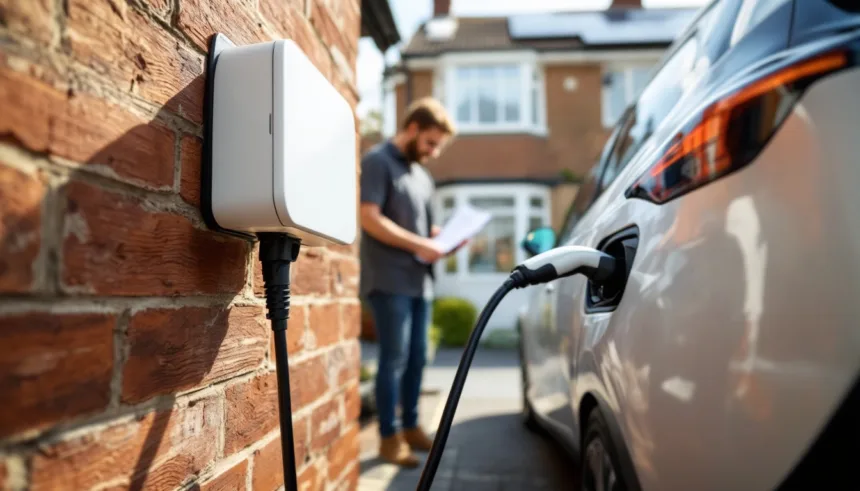
An EV charger plus home battery combo promises lower energy bills, greater independence from the grid, and the ability to charge your car on stored solar or off-peak power. But the upfront cost, often £8,000 to £15,000 for both systems, means the decision hinges on your driving patterns, electricity tariff, solar generation, and how long you plan to stay in your home.
- When an EV charger home battery combo pays off
- How an EV charger home battery combo actually works
- Upfront costs in the UK and Germany
- Savings, payback time and real-world examples
- Solar vs no-solar: who benefits most?
- Key factors that decide if the combo is worth it
- Smart tariffs, AI controls and future tech
- Risks, pitfalls and when not to buy the combo
- Practical steps and alternatives if you start smaller
- Frequently Asked Questions
When an EV charger home battery combo pays off
For most UK and German homeowners in 2026, an EV charger home battery combo is worth it only when three things line up: you drive enough, you have (or will add) solar, and you can access a decent smart or off-peak tariff. In those conditions, pairing an EV charger with a 5-10 kWh home battery can realistically pay back in roughly 7-12 years; outside them, payback often stretches towards 15-20 years or never, especially if you have no solar and low annual mileage.
The combo tends to work best if you: have rooftop solar sized at roughly 4 kWp or more; drive at least 10,000-12,000 km per year (UK or Germany); can use a time-of-use or EV tariff to charge cheaply overnight; and typically park at home most nights so the EV charger is actually used. In this sweet spot, the battery soaks up daytime solar and off-peak grid power, then supports both home loads and EV charging, cutting imported electricity costs and giving some backup resilience.
It is usually a poor fit if you: don’t have solar and can’t get a competitive off-peak tariff; drive under about 6,000 km a year; mainly charge at work or public hubs; rent, or may move within 5-7 years; or have a shaded, small roof where solar output will stay modest.
More Read

Related internal resource charge EV without driveway UK.
How an EV charger home battery combo actually works
An EV charger plus home battery combo ties your car, house and energy tariff into one system. In a typical UK or German setup you have: an AC home EV charger on your driveway or wall, a home battery (usually 5-15 kWh), an inverter that manages power flows, optional solar panels, and a smart control app that talks to your time-of-use tariff.
Power can move in several directions. Solar (if you have it) feeds your home first, then tops up the home battery, and finally charges the EV if there’s surplus. Without solar, the battery fills from the grid when electricity is cheap (usually night or dynamic off-peak). Later, both your home and EV can draw from that stored cheap energy instead of paying peak prices. The EV charger itself just delivers AC power to the car; the battery and inverter decide whether that energy comes from solar, stored power, or the live grid.
This is where an EV charger home battery combo is worth it for some households. The system can “time-shift” energy: buy or capture it when it’s cheap, use it when it’s expensive.

Related internal resource EV charger no garage Germany.
Upfront costs in the UK and Germany
By 2026, most homeowners comparing an EV charger and home battery will be looking at a 7 kW wallbox and a 5-15 kWh battery. Installed pricing varies meaningfully between the UK and Germany once VAT, grants, and electrical upgrades are factored in.
In both markets, a basic tethered 7 kW EV charger without major electrical work typically lands in the low four figures, while a quality 10 kWh lithium home battery with hybrid inverter often costs five to seven times as much installed. Adding solar, load management hardware, and smart metering can move a project from a modest single purchase to a full-system investment.
| Item | UK typical 2026 | Germany typical 2026 | Notes |
|---|---|---|---|
| 7 kW EV charger | £800-£1,400 | €1,000-€1,600 | Installed, no major rewiring |
| Panel / cabling upgrades | £200-£800 | €300-€900 | Only if capacity limited |
| 5-10 kWh battery | £4,500-£8,000 | €5,000-€9,000 | Includes inverter, install |
| 10-15 kWh battery | £7,000-£11,000 | €8,000-€12,000 | For higher EV usage |
| Charger + battery combo | £6,000-£13,000 | €7,000-€14,000 | Before any subsidies |
In the UK, zero or reduced VAT on home batteries when installed with solar can trim several hundred pounds compared with a standalone retrofit, and some local authorities occasionally support low-carbon upgrades. In Germany, state-level or utility schemes periodically subsidise home batteries or wallboxes, but funding windows and rules change often, so homeowners usually need to check active programmes before committing.
Extras that often add to a 2026 quote include groundworks for detached garages, drilling through thick masonry, smart load balancing to avoid main fuse upgrades, and integration with existing PV or heat pump systems.
Savings, payback time and real-world examples
The savings and payback from pairing a home EV charger with a battery depend on how much price spread you can exploit (cheap vs expensive electricity), how often you avoid public rapid charging, and whether you have solar. In 2026 UK and German markets, the EV charger home battery combo is usually justified by stacking three revenue streams rather than just one.
| Driver type | Tariff/solar | Main saving | Typical payback |
|---|---|---|---|
| UK, solar | Agile + 4 kW PV | Solar + time shift | 7-11 years |
| UK, no solar | 2-rate EV tariff | Off-peak arbitrage | 10-15 years |
| DE, solar | Dynamic + 6 kW PV | Solar self-use | 9-13 years |
| DE, no solar | Flat tariff | Some load shifting | Often 15+ years |
1. Off-peak arbitrage (night vs day)
In both countries, smart EV tariffs can offer night rates roughly 10-20 p/kWh (UK) or 15-25 c/kWh (Germany) below daytime. A 10 kWh home battery cycled once daily at a 15 p/kWh spread can save around £1.50 per day, or ~£550 per year, before battery efficiency losses and standing charges. If you mainly charge the EV at home overnight, the battery adds value by letting other household loads consume cheap stored energy during peak periods.
2. Solar self-consumption
With solar, the combination often improves payback because exported power may earn far less than retail import prices. A battery allows most surplus PV to be stored, then used for the home and EV. Guides like this solar and smart EV charging overview show how smart controls automatically prioritise cheap or free kWh for charging.
Worked example A, UK, with solar Assumptions: 4 kW PV in southern England generating ~3,600 kWh/year; 10 kWh battery; EV doing 10,000 miles/year at 0.25 kWh/mile (2,500 kWh); Agile-style tariff with average 15 p/kWh off-peak vs 35 p/kWh peak; export payment ~15 p/kWh.
Solar vs no-solar: who benefits most?
The EV charger home battery combo is most compelling when you can refill the battery cheaply and use that stored energy to avoid expensive grid electricity. Rooftop solar does this most efficiently in both the UK and Germany, but smart tariffs and heavy electric loads (like heat pumps) can also make the combo pay without solar.
| Scenario | Best For | Typical Payback | Main Risk |
|---|---|---|---|
| Solar + charger only | Light EV use | 6-10 years | Undersized array |
| Solar + charger + battery | Daily EV, high use | 8-14 years | High upfront cost |
| No solar, smart tariff | Night charging, heat pump | 10-16 years | Tariff changes |
| No solar, flat tariff | Very high usage only | Often 15+ years | Low savings spread |
| No solar, low EV miles | Rarely worth it | 20+ years | Underused system |
With solar, you gain two stacked benefits: you avoid buying peak-rate electricity and you use more of your own generation instead of exporting it cheaply. In the UK and Germany, where export payments are modest and retail prices are high, a 5-10 kWh battery plus a 7 kW smart charger can turn a typical solar home into a much more self-sufficient system. Homes that charge an EV most days and run big evening loads (induction hob, heat pump, electric shower) usually see the strongest returns, especially under time-of-use tariffs.
Without solar, the combo relies on “price arbitrage”: filling the battery overnight on cheap-rate electricity and discharging during peak times, including to charge the EV.
Key factors that decide if the combo is worth it
Whether an EV charger and home battery combo is worth it for you in 2026 comes down to how much cheap electricity you can reliably access and actually use. Focus on your driving pattern, tariffs, solar potential, and how long you’ll stay put.
Start with six hard filters:
- Annual driving: If you drive under ~6,000 miles (10,000 km) a year, prioritise a smart EV charger only; a battery’s savings may be small.
- Tariff structure: A big off-peak vs peak price gap (e.g. UK smart EV tariffs, dynamic tariffs in Germany) usually makes storage more valuable; flat pricing weakens the case.
- Solar size and fit: No solar, or less than ~3 kWp and little daytime export, limits home battery benefit; a larger array with regular export strongly supports the combo.
- Household demand profile: Evening-heavy use (cooking, heat pump, immersion, work-from-home) improves battery value; low night and peak use reduces it.
- Grid and connection limits: In constrained areas or where your DNO/DSO restricts EV charger power, a battery plus smart charging can help stay within limits, nudging the combo towards “yes”.
- Time in property: If you expect to move within 3-5 years, recovery of a full battery investment is uncertain; staying 8-10+ years is usually needed for solid payback.
Then apply this quick decision path:
- If you can’t install a charger at all (no parking, no permission), stop: neither the EV charger nor home battery combo is your next move; look at workplace and public options instead, like those in guides on how to charge EV without driveway UK.
- If you can install a charger and have cheap night tariffs but no solar, start with a smart EV charger only; consider adding a battery later if your household peak use rises.
- If you have (or will add) 4 kWp+ solar, export regularly, and pay high peak rates, the combo is usually worth exploring now, especially if you’ll stay long term.
- If your budget is tight or you’re unsure you’ll keep the EV or the house, install the charger first; defer the battery until you’ve seen a year of bills and driving data.
Smart tariffs, AI controls and future tech
Smart tariffs and AI-style optimisation tools can make an EV charger plus home battery combo far more valuable than simple “plug it in at night” setups. Instead of guessing when to charge or discharge, software tracks prices, solar output and your habits, then automates most decisions for you.
In the UK, dynamic tariffs like Octopus Agile and off-peak deals such as Intelligent Octopus or EDF GoElectric offer cheap overnight windows or half-hourly prices linked to wholesale markets. In Germany, products from utilities like Tibber or Awattar use spot-market prices in a similar way. Smart chargers and battery inverters connect to these tariffs via apps or APIs, then schedule EV charging and battery charging for the cheapest half-hours while keeping enough energy available for your usual driving and household use.
AI-driven controls layer on prediction. They learn when you leave for work, how many kilometres you typically drive, and how much solar your roof usually generates on a cloudy Tuesday in March.
Risks, pitfalls and when not to buy the combo
A combined system can backfire financially and operationally in several scenarios. If you drive fewer than 8,000 km annually, the battery rarely cycles enough to justify its capital cost, payback stretches beyond 15 years even with solar. Renters and leaseholders face stranded-asset risk: neither component transfers easily, and landlord permission is often withheld.
Cycling a home battery solely to charge your EV accelerates degradation without tariff arbitrage gains. Lithium cells lose roughly 2-3% capacity per 1,000 full cycles; using a 10 kWh battery to top up a car daily can halve its lifespan in five years. Instead, charge the vehicle directly during off-peak windows and reserve the battery for household loads.
High-interest financing erodes savings quickly. A £12,000 system on a 7% loan costs £2,100 in interest over five years, wiping out two years of typical tariff savings. Roof shading, north-facing pitches, or fewer than 20 m² of unobstructed space make solar unviable, leaving the battery dependent on grid arbitrage alone, a model that rarely pays back before warranty expiry.
Practical steps and alternatives if you start smaller
If you’re unsure an EV charger home battery combo is worth it today, phase the decision instead of doing nothing. Treat the charger as phase one, and keep the battery as an option once you’ve lived with real charging data for 6-18 months.
Start by planning a simple, scalable install:
- Confirm basics: off-street parking and a suitable supply; if not, compare kerbside options in this guide on how to charge EV without driveway UK or the best setups for EV charger no garage Germany.
- Choose a smart charger that already supports solar, load management and “battery-ready” integration; learn the essentials in this primer on how does home EV charging work.
- Ask installers: maximum available grid capacity (in kW), any need for a DNO/stromnetz upgrade, and whether the charger can later control a home battery or participate in smart tariffs.
- Set up smart charging only for now: time-of-use tariffs, off-peak scheduling and, if you have PV, solar-priority charging; see EV charging speeds explained home so you don’t overpay for unnecessary power.
- Track for 6-12 months: nightly kWh used, percentage of solar vs grid, and how often the car sits full.
- Re-check the numbers when tariffs or your driving change. Only add a battery if it can soak up spare solar or cheap off-peak power most days, and the forecast payback is inside your comfort window.
- If home upgrades still look marginal, stick with smart charging plus a reliable workplace or public-charging routine instead of forcing a full combo.
Frequently Asked Questions
Is it worth having an EV charger at home?
A home EV charger is usually worth it if you can park on your property and drive at least 6,000-8,000 miles a year. In the UK and Germany, pairing a 7 kW charger with an off-peak tariff typically cuts per-mile costs versus public charging and adds convenience.
Is it worth having two EV chargers at home?
Two EV chargers only make sense if you have two EVs that regularly need to charge at the same time and cannot stagger overnight charging. Even then, smart load management may be required.
Which is better, a 3kW or 7kW home charger?
For most UK and German homes, a 7 kW charger is better than 3 kW because it adds about 25-30 miles of range per hour versus roughly 10 at 3 kW, making full overnight charges realistic. Hardware and installation costs are similar; the main limit is your grid connection.
What are common mistakes when recharging batteries?
Common mistakes include deep-cycling home batteries daily to 0-100%, ignoring off-peak tariffs, and oversizing or undersizing storage relative to actual EV and household use. Many owners also leave EVs at 100% for days.
What should you never do while the EV is charging?
Never use domestic extension leads, multi-plug adapters, or damaged cables while an EV is charging, and avoid covering the charger or cable, which can trap heat. Do not park so tightly that the cable is strained, and never bypass safety devices or disable earth protection.
An EV charger home battery combo worth it depends on whether you have solar, drive enough miles to justify the battery’s capacity, and can access a tariff that rewards time-shifting. If you generate surplus solar and drive over 10,000 miles a year, payback can land inside five to seven years in the UK and six to nine in Germany.
Without solar, the case weakens fast: a charger alone often delivers 80 percent of the benefit at a fraction of the cost. Use the checklist in this guide to map your household’s numbers, then decide with confidence whether to invest now, phase the purchase, or wait for prices to fall further.